01
The written word
From the illuminated Book of Kells to Joyce, Yeats, Beckett and Heaney — four Nobel laureates in literature from a small island.
What this website is
Stone by Stone is a non-commercial, independently written history of Ireland and of the Republic of Ireland. It follows the island from the Gaelic kingdoms and the coming of Christianity, through Viking settlement, Norman invasion, plantation, penal law, famine and emigration, to the Rising, the Treaty, the Constitution of 1937 and the Republic declared in 1949 — and on to the farms, galleries, museums, cafés, pubs, music and symbols that carry the culture today.
Every chapter is written to be accurate rather than sentimental. Where the historical record is disputed — the authenticity of Laudabiliter, the origin of the ringed high cross, the folklore around dance before battle — that uncertainty is stated plainly rather than smoothed over. Nothing here is sold, sponsored or advertised.
Written with respect
For the generations who endured hunger, eviction, exile and war, and who kept a language and a faith alive without institutions to protect them.
Held to accuracy
Dates, statutes, treaties and figures are given as the sources record them; legend is named as legend.
Independent and free
No advertising, no sponsorship, no paywall — an editorial record, made for readers rather than for sale.
An island, a state, a people
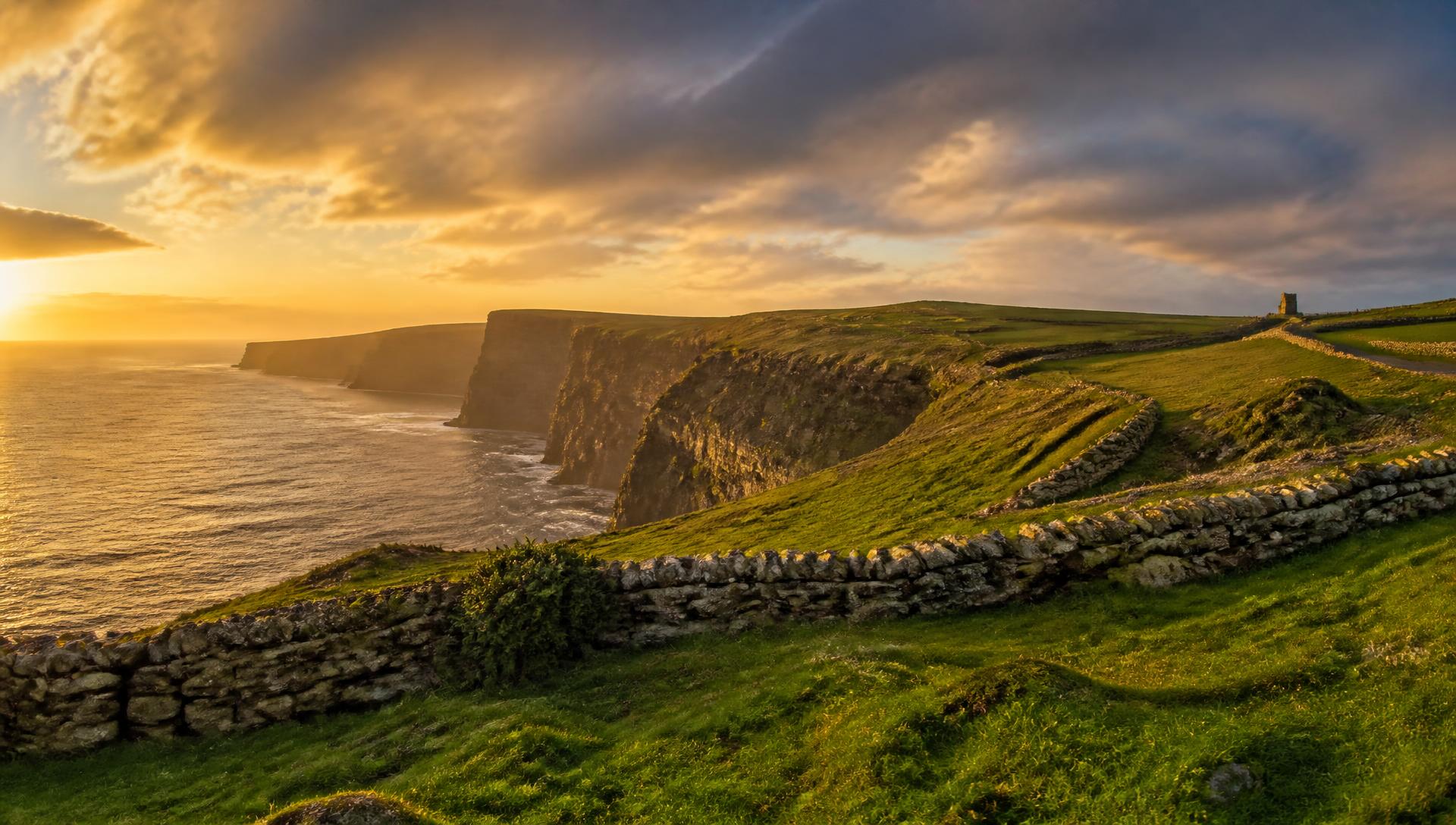
How a contested island became the Republic of Ireland — laid down like a dry-stone wall, one hard-won course at a time.
Chapter One — Before the Ships
Before 1169 Ireland was not a blank space waiting to be civilised. It was a dense mesh of túatha — small kingdoms bound by dynastic overlordship — governed by Brehon law, an indigenous legal tradition of contract, compensation and status that was recorded in writing centuries before the Normans arrived. Land was held by kin groups rather than by a feudal chain of tenure, which is precisely why later conquerors found it so hard to buy, seize or register.
Its monasteries — Clonmacnoise, Glendalough, Kells — were schools of Latin and Irish learning that sent missionaries back into a post-Roman Europe. The claim that Ireland needed religious correction in 1155 has to be set against the fact that Irish monks had been teaching Christianity abroad for five hundred years.
Chapter Two — The Invasion and the Long Colony
1169–71
Diarmait Mac Murchada, deposed king of Leinster, recruits Cambro-Norman lords in Wales. Richard de Clare — Strongbow — lands at Passage East in 1170 and takes Waterford and Dublin. In 1171 Henry II arrives with a royal fleet to make sure his barons do not build a rival kingdom, and receives submissions from many Irish kings.
1155 / 1172
The bull Laudabiliter, attributed to Pope Adrian IV, is said to have licensed Henry II to enter Ireland to 'reform' its church. Ireland was already deeply Christian — it had evangelised much of Europe — but its monastic, family-based church did not fit the Roman diocesan model being imposed across Latin Christendom. The Synod of Cashel in 1172 aligned Irish practice with English usage. Reform was the language; lordship was the outcome. Historians still argue over the bull's authenticity, and that argument is itself part of the story.
1175
Ruaidrí Ua Conchobair, the last high king, accepts Henry II as overlord while keeping authority beyond the conquered lands. The treaty is broken almost immediately by barons who answered to no one, and the frontier keeps moving west.
13th century
The Lordship of Ireland spreads: motte-and-bailey then stone castles, chartered towns, manors, tithes and English common law. A parliament meets in Dublin. Two legal worlds sit side by side — common law for the colonists, native Brehon law for the Irish, who are largely denied access to the king's courts. Exclusion, not integration, is written into the system from the start.
1258–1300
Irish lordships in Ulster, Connacht and the midlands push back, hiring gallowglass mercenaries from the Hebrides. Brian Ua Néill is proclaimed king of Ireland in 1258 and killed at Down in 1260. The colony stops expanding and begins, slowly, to contract.
1315–18
Edward Bruce, brother of Robert the Bruce of Scotland, lands at Larne and is crowned King of Ireland — invited by Domnall Ua Néill as part of a pan-Gaelic alliance against the English crown. This was not a king turning on his own people: it was a Scottish opening of a second front in Scotland's own war of independence. Robert campaigned in Ireland in 1317. The three years coincide with the Great European Famine, and the armies stripped the country bare. Edward Bruce is killed at Faughart near Dundalk in 1318, and the annalists record his death almost with relief.
1348
The Black Death hits the walled towns and ports hardest — which is to say, it hits the colonists hardest. The English area of control shrinks toward the Pale around Dublin, and many Anglo-Norman families become, in the phrase of the time, 'more Irish than the Irish themselves' — speaking Irish, keeping Irish law and fostering Irish children.
1366
A parliament at Kilkenny legislates against that drift: no Irish language, no Irish dress, no Irish names, no Irish law, no Irish music, no intermarriage among the king's subjects. It is one of medieval Europe's clearest attempts to legislate a cultural border — and its very existence proves how thoroughly the two peoples had already mixed. The statutes were largely unenforceable, and were repeated for centuries because they never worked.
Chapter Three — The Question
Hostility was not a national temperament. It was the argument a conquest needed in order to keep going.
Strategy. Ireland sat on England's western flank. An independent or hostile Ireland was a landing ground for Spain, and later for France — a fear proved real at Kinsale in 1601 and again in 1798. Every English government from the Tudors onward treated the island as a security problem first.
Land. Conquest paid for itself in acres. Plantation, confiscation and the Penal Laws transferred ownership to a new class, and that class needed a justification for holding it.
Religion as licence. In 1155 the pretext was church reform; after the Reformation it inverted, and Catholicism itself became the mark of disloyalty. Both times faith supplied the moral cover for a political and economic project.
Caricature. From Gerald of Wales in the 1180s to Victorian cartoons, Irish people were written up as wild, idle and barbarous. The caricature was not an observation; it was the paperwork of dispossession. You cannot take a country from equals.
What was read as stubbornness was continuity: a people refusing to surrender their language, law, faith and name because those were the only things that could not be confiscated.
Chapter Four — Kingdoms, Crowns and the Boyne
1541
Henry VIII is declared King of Ireland by the Irish Parliament. Combined with the Reformation, this changes the terms entirely: religion now defines loyalty, and the majority Catholic population becomes, by law, suspect in its own country.
1594–1603
Hugh O'Neill and Hugh Roe O'Donnell fight the Crown to a standstill in Ulster before defeat at Kinsale in 1601. The Treaty of Mellifont in 1603 ends independent Gaelic power.
1607–1610
The northern earls leave for the Continent; their lands are confiscated and settled with English and Scottish Protestant colonists. Plantation is land transfer as policy, and it draws the fault line that runs through Irish history afterwards.
1641–1653
Rising and massacre in 1641; the Catholic Confederation governs from Kilkenny during the Wars of the Three Kingdoms; Cromwell's campaign of 1649–50 — Drogheda, Wexford — is followed by mass land confiscation under the Act of Settlement. Catholic landholding collapses from most of the island to a small fraction.
1689–91
James II, the deposed Catholic king of England, Scotland and Ireland, lands at Kinsale and summons the Patriot Parliament in Dublin. Ireland becomes the battlefield of a European war between James, backed by Louis XIV, and William of Orange, backed by a Grand Alliance that the Pope himself supported against France. Derry holds out through a 105-day siege; James is beaten at the Boyne in 1690; the war ends at Aughrim and the Treaty of Limerick in 1691.
1695–1728
Catholics — and initially Presbyterians — are barred from parliament, the professions, the officer corps, arms, education and secure land tenure. The aim is not conversion so much as permanent political disability. Religion becomes the mechanism of an economic and legal order.
Chapter Five — The Records That Burned
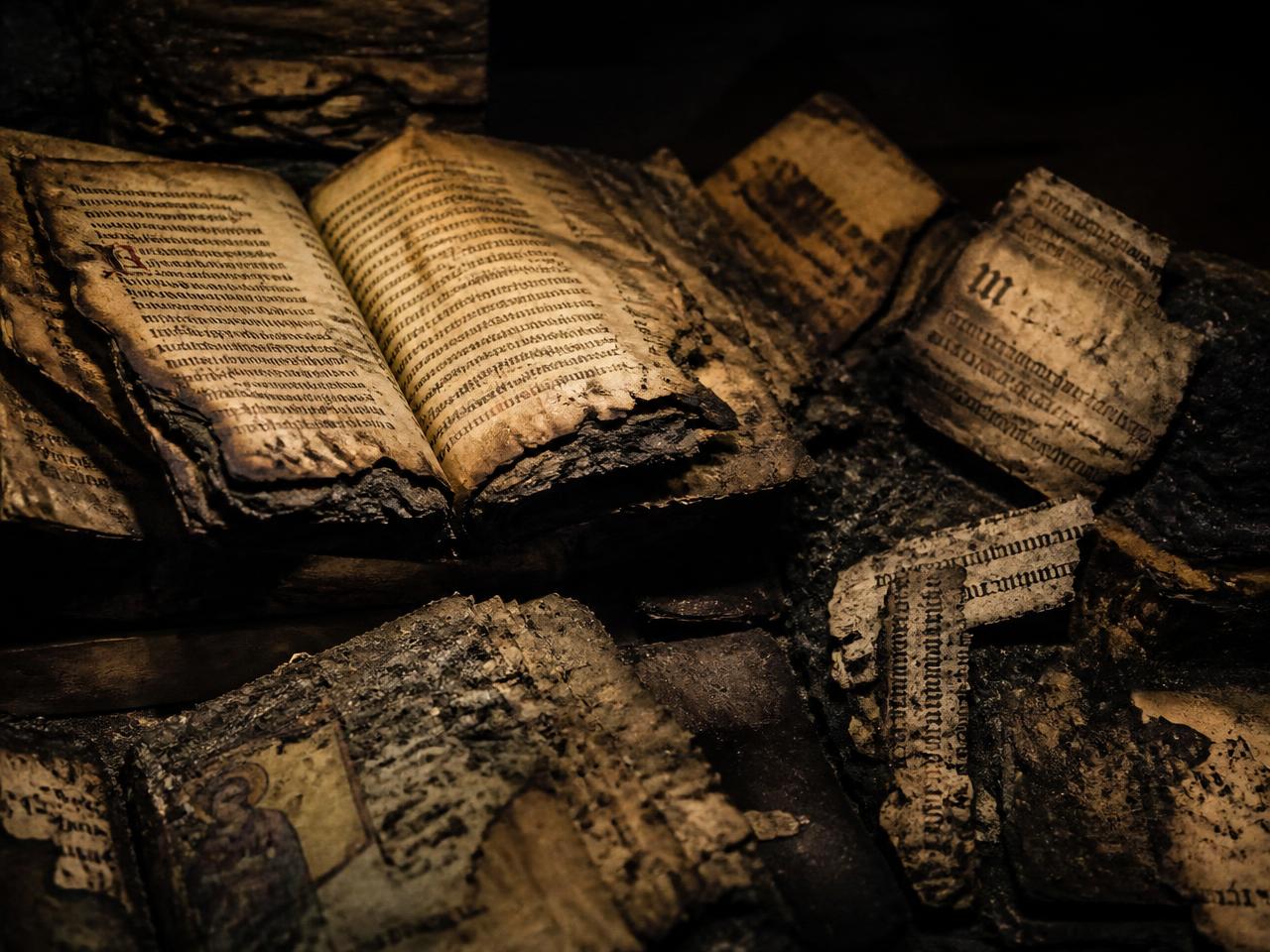
On 30 June 1922, in the opening engagement of the Civil War, the Public Record Office at the Four Courts in Dublin was destroyed by explosion and fire. Inside were medieval chancery and exchequer rolls, court records, wills, parish registers and most of the nineteenth-century census returns — the documentary spine of Irish life from the thirteenth century onward.
Earlier losses compound it: monastic libraries dispersed at the dissolution, Gaelic legal and genealogical manuscripts scattered during the Tudor and Cromwellian wars. Much of what survives of medieval Ireland survives in Irish annals kept by monks and hereditary scholars, and in copies held abroad. The Virtual Record Treasury project has since rebuilt part of the archive from those transcripts and duplicates.
Chapter Six — The Sea Raiders
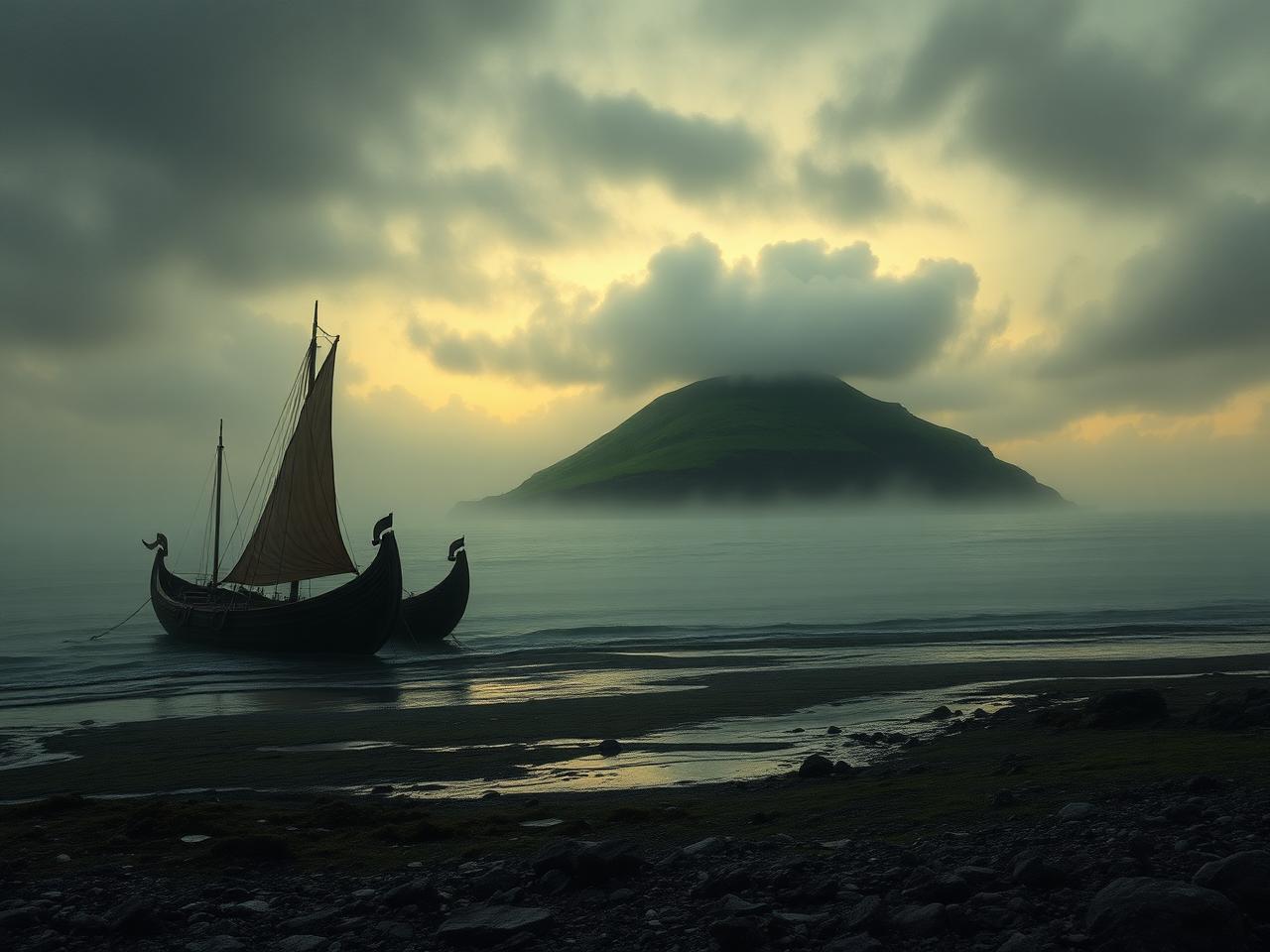
The first recorded raid struck Rathlin Island in 795. For two generations Norse fleets worked the coasts and river systems, targeting monasteries because monasteries held portable wealth, food and people to sell. Slaving, not settlement, was the early business.
From 841 the pattern changed. Longphuirt — fortified ship camps — became permanent: Dublin, Waterford, Wexford, Cork and Limerick were founded as Norse trading towns, Ireland's first real urban places, minting its first coinage from 997 and linking the island into a network running from York to Novgorod.
There was never a single Norse conquest of Ireland. The island had no one throne to seize; a hundred-odd túatha and a shifting hierarchy of over-kings made it costly to hold and easy to divide. Irish kings fought the Norse, hired them, married into them, and used them against each other.
Clontarf, on Good Friday 1014, was the reckoning: Brian Boru, high king of Ireland, against the Dublin Norse, the Leinstermen and Norse allies from Orkney and the Isle of Man. The annals describe a day-long fight and thousands of dead on both sides, including Brian himself, killed in his tent after the battle was won. It did not expel the Norse — the Hiberno-Norse stayed and became Irish — but it ended any prospect of a Scandinavian kingdom of Ireland.
Chapter Seven — An Ghaeilge
The question behind the question is a fair one: if the island has always been Ireland, why is it English-speaking? No single decree did it. Irish was not banned out of existence overnight — it was stripped of everything that keeps a language alive: its law, its schools, its landowning class, its church administration, and finally, in the Famine, a large share of the people who spoke it.
c. 500 BC – AD 400
Irish (Gaeilge) is a Goidelic language of the Celtic branch of Indo-European — a cousin of Scottish Gaelic and Manx, and a more distant relative of Welsh, Cornish and Breton. Scholars debate whether it arrived with migration or spread through long Atlantic trade and cultural contact, but by the early centuries AD it was the speech of the whole island.
c. AD 400–600
The earliest written Irish survives as ogham: notched strokes cut along the edges of standing stones, roughly 400 of them in Ireland. With Christianity came the Latin alphabet, and Irish became one of the first vernaculars in western Europe to be written down extensively alongside Latin.
600–1200
Monastic and secular scholars produced law tracts, annals, genealogies and the great saga cycles — the Táin Bó Cúailnge among them. Irish was the working language of Brehon law and of a hereditary learned class of poets (filí), lawyers and historians.
1366–1600
The Statutes of Kilkenny (1366) forbade the English colonists to speak Irish, take Irish names or follow Irish law — proof that they had been doing exactly that. Outside the Pale, Irish remained dominant, and many Norman families became Irish-speaking. Tudor policy then targeted the learned class directly, dismantling the patronage that sustained the language.
1607–1750
The Flight of the Earls, the plantations, the Cromwellian confiscations and the Penal Laws stripped Irish of the aristocracy, the law courts, the church structures and the property that had carried it. It survived as the everyday speech of the poor while English became the language of power, land and advancement.
1831–1900
The National School system taught through English; a tally stick was used in some schools to punish children for speaking Irish. Then the Great Famine (1845–52) fell hardest on the poorest, most Irish-speaking districts of the west and south. Roughly one million died and one million emigrated; by 1900 the language had retreated to the Atlantic fringe.
1893–today
Conradh na Gaeilge (the Gaelic League, 1893) set out to reverse it, and language revival became inseparable from the independence movement. Today Irish is the first official language of the State, taught in every school, spoken daily in the Gaeltacht, carried by TG4 and Raidió na Gaeltachta, growing in Gaelscoileanna, and an official language of the European Union since 2007.
Irish English is the result: English words carrying Irish grammar and Irish rhythm — "I'm after doing it", "does be", the after-perfect and the habitual present, all direct translations from Gaeilge. The language did not vanish. It moved into the English the island now speaks.
Chapter Eight — Music, Dance and Defiance
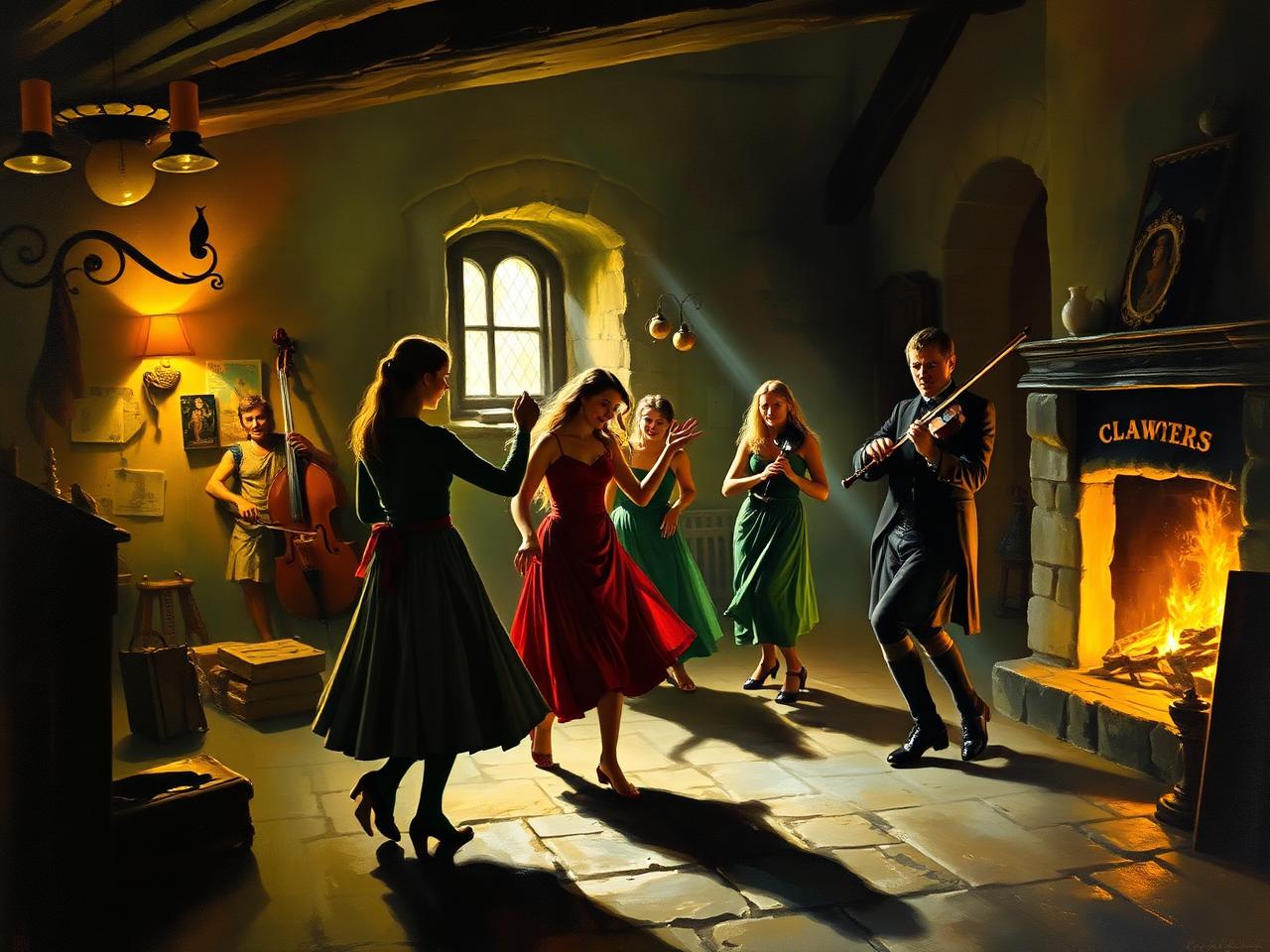
Being accurate matters here. There is no reliable record of a formal Irish dance performed as a ritual on the eve of battle — that image belongs to later romance rather than to the annals. What the sources do record is music as an instrument of war: war-pipes and horns to set the advance, and the war-cry raised by massed kern and gallowglass, described by English commanders as unnerving in itself. In 1609 an English writer called the Irish pipes an incitement to battle; the pipes were later banned by name in penal legislation for exactly that reason.
Dance belongs to the other half of the story — the return, the wake, the pattern day, the wedding, the crossroads. The first clear descriptions come from the sixteenth century: visitors to Galway and to Anglo-Irish households describe the rince fada, long lines of dancers greeting an arrival, and round dances performed after Mass and after victory. By the eighteenth century travelling dance masters carried set steps parish to parish, teaching on cabin doors laid flat on the floor.
Under the Penal Laws, that was the point. Gathering to play and dance was gathering, and gathering was suspect. Holding the steps, the tunes, the language and the Mass in the open air was a slow, stubborn refusal to be administered out of existence. Conradh na Gaeilge revived the feis in the 1890s, the Gaelic Athletic Association did the same for hurling and football in 1884, and the same rhythms carried out to Boston, Liverpool and Sydney in emigrant halls — and back again, in 1994, as Riverdance.
Chapter Nine — The Fifteenth Century
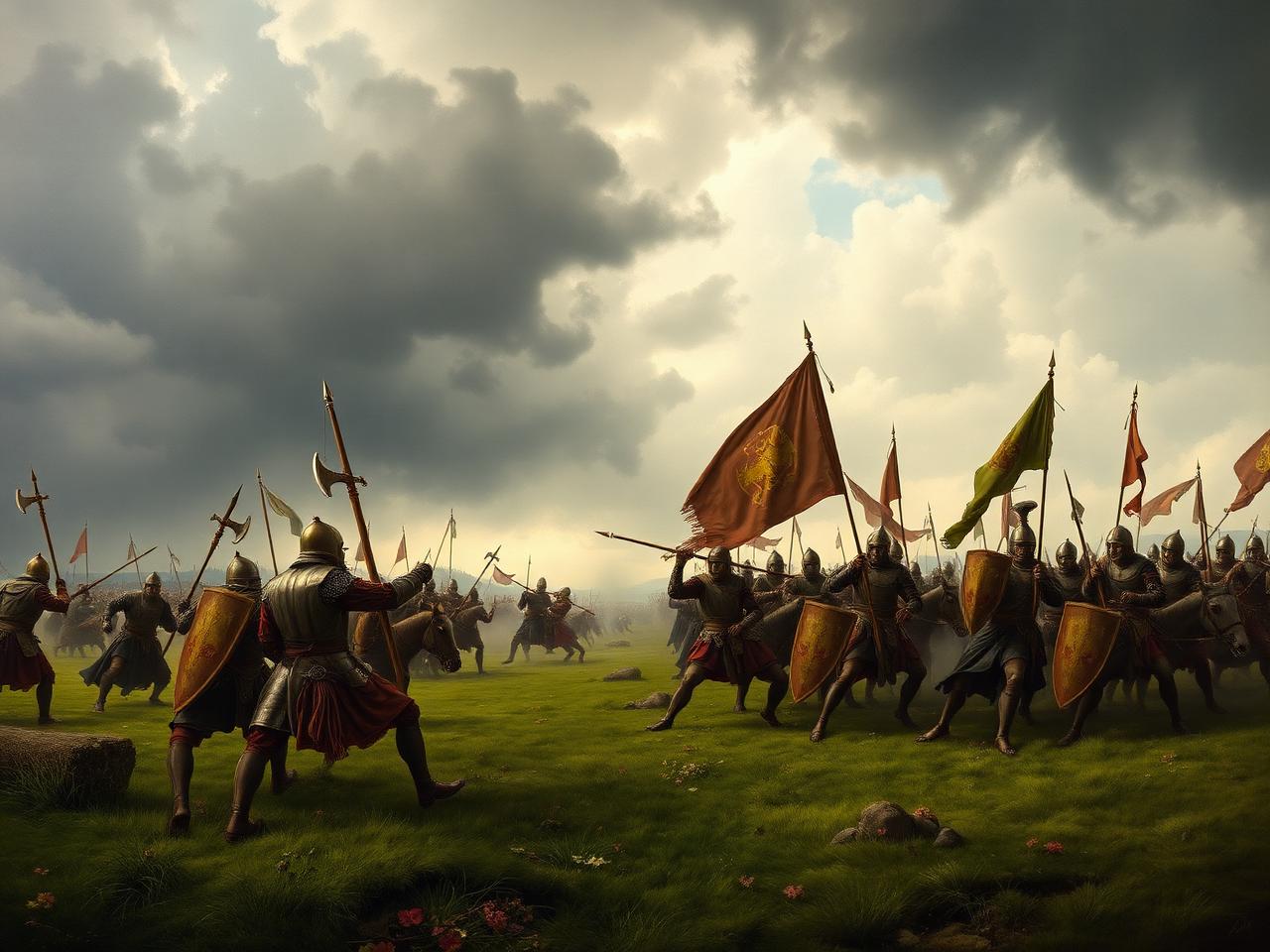
After the Black Death and the collapse of the medieval colony, the 1400s were the high-water mark of Gaelic recovery. English rule shrank to the Pale; Gaelic law, language and lordship ran almost everywhere else. It ended not with an Irish defeat but with an English constitutional clamp — Poynings' Law — and the beginning of the Tudor reconquest.
1394 & 1399
The only reigning English king to campaign in Ireland in the later Middle Ages came twice. The first expedition won submissions from Gaelic lords; the second collapsed when Art Mac Murchadha Caomhánach of Leinster refused to be pinned down and Richard was forced home to lose his crown.
c. 1400–1460
English authority contracted to the Pale — a fortified strip around Dublin behind ditch and rampart. Beyond it, Gaelic and Gaelicised lordships governed by their own law and paid 'black rent' was often extracted from the colony rather than to it. The O'Neills, O'Donnells, O'Briens and Mac Murchadhas were effectively sovereign.
1462
The Wars of the Roses reached Ireland: Butlers of Ormond (Lancastrian) against the FitzGeralds of Desmond (Yorkist) in County Kilkenny. The Desmond victory left the FitzGeralds dominant and shows how Irish and English factional war had fused into one contest.
1487 & 1491
Lambert Simnel was crowned 'Edward VI' in Christ Church Cathedral, Dublin, with the backing of the Earl of Kildare; Perkin Warbeck was received in Cork. Ireland had become a base from which the English crown itself could be challenged.
1494
London's answer. Sir Edward Poynings' parliament at Drogheda subordinated the Irish parliament to the English king and council — no bill without prior approval. It bound Irish legislation for nearly three hundred years, until 1782.
1504
At the century's close, Gerald FitzGerald, Earl of Kildare, met Ulick Burke near Galway in one of the largest battles fought in medieval Ireland — gallowglass axemen, kern skirmishers, cavalry and early firearms together. Contemporary accounts speak of thousands of dead; the figures are estimates, not records.
Chapter Ten — The Scattering
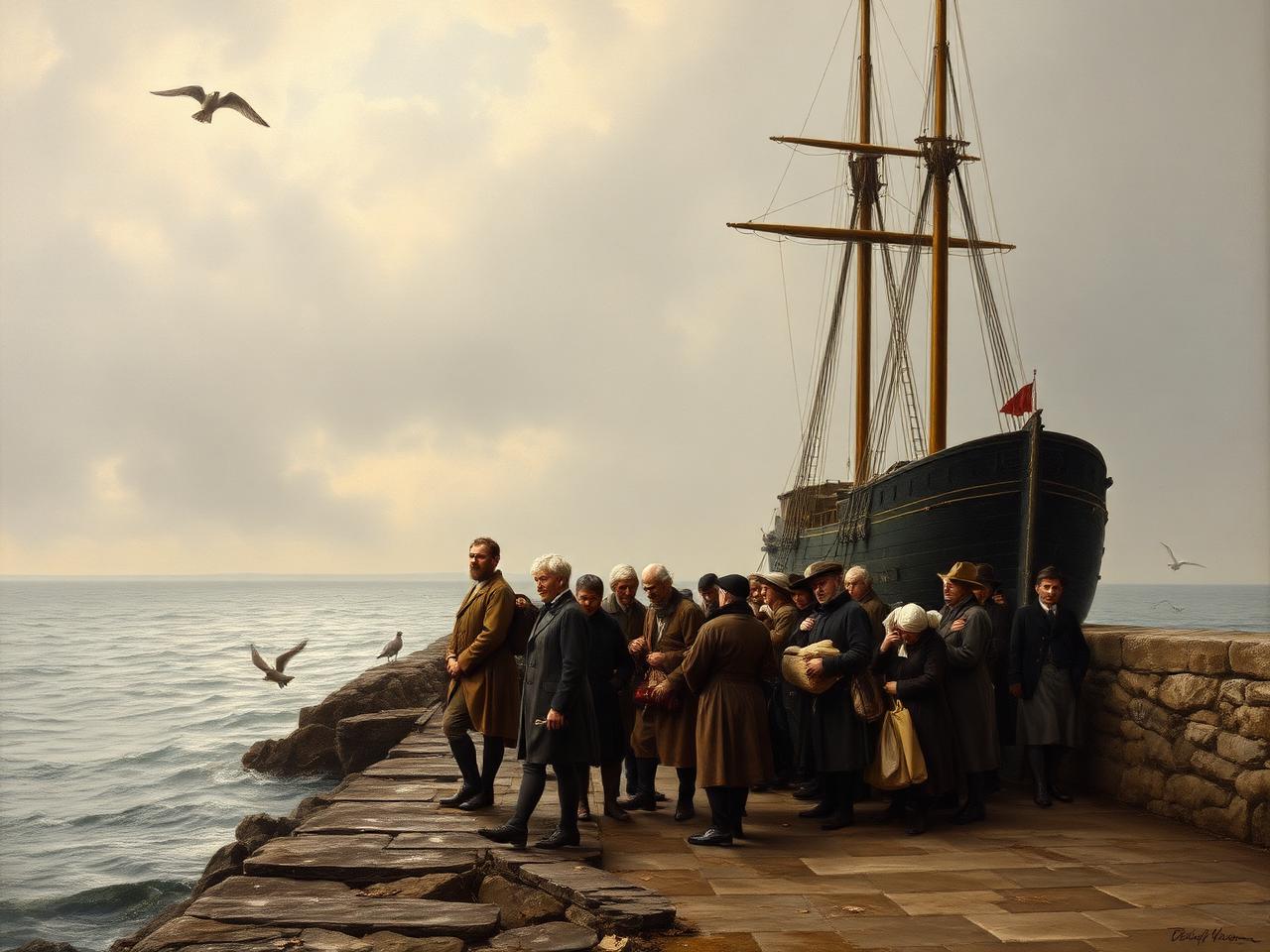
War and hunger emptied the island in waves. Some 20,000 soldiers left for continental service after the Treaty of Limerick in 1691 — the Wild Geese, who fought in the armies of France, Spain and Austria. Thousands more were transported to the Caribbean and Virginia as indentured labour under the Cromwellian settlement.
Then came An Gorta Mór, the Great Hunger of 1845–52. Potato blight destroyed the crop that fed the poorest three million people on the island while food continued to be exported under armed guard. Approximately one million died of starvation and disease, and another million emigrated in six years — many in overcrowded vessels remembered as coffin ships. Ireland's population fell from roughly 8.2 million in 1841 to about 4.4 million by 1911, the only country in Europe with fewer people at the end of that century than at its start.
It was the darkest passage in the island's history, and it was not the end of it. The diaspora — some 70 million people worldwide claiming Irish descent — kept the songs, the steps, the faith and the funding that would later help pay for independence.
Chapter Eleven — The Farmer's Table
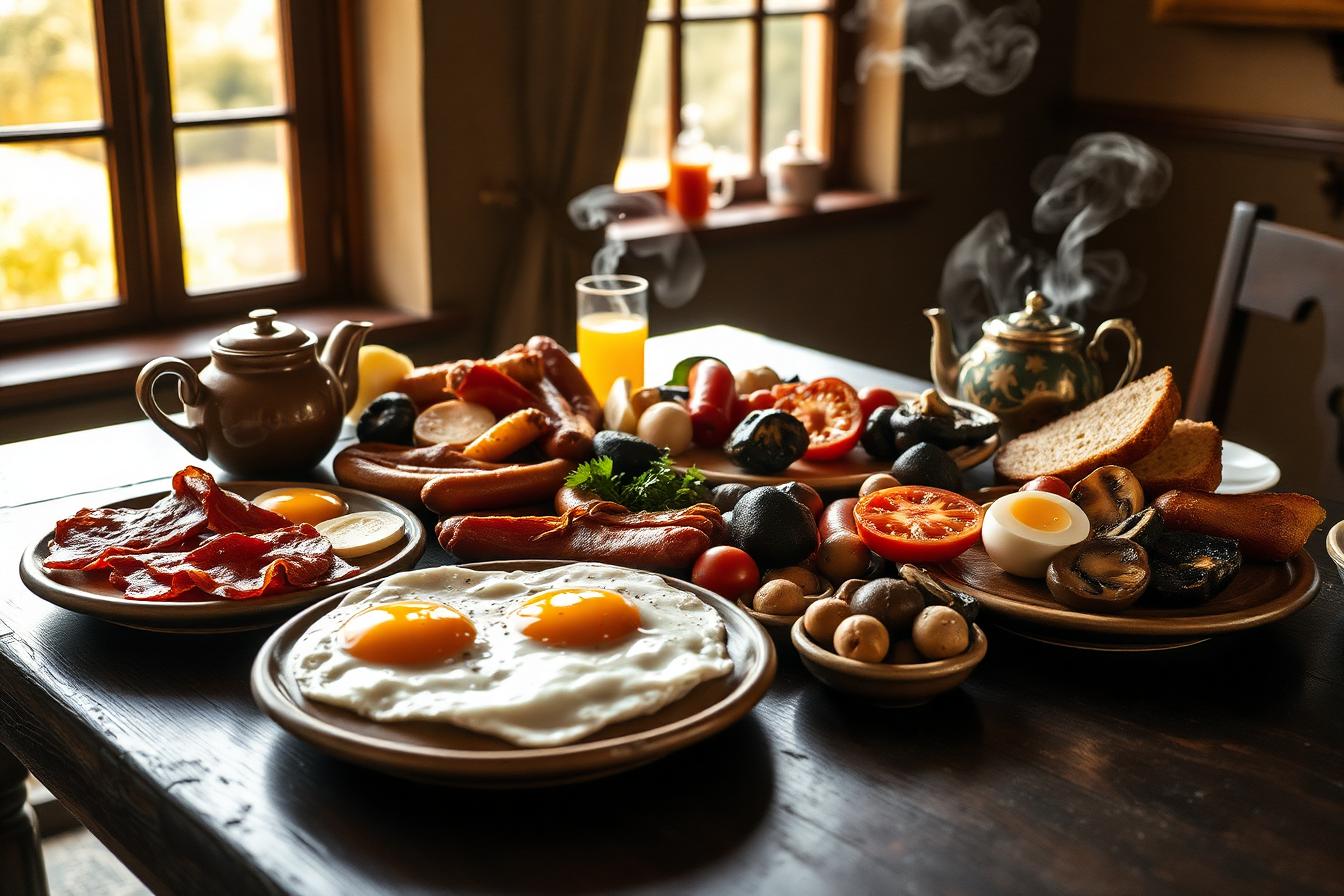
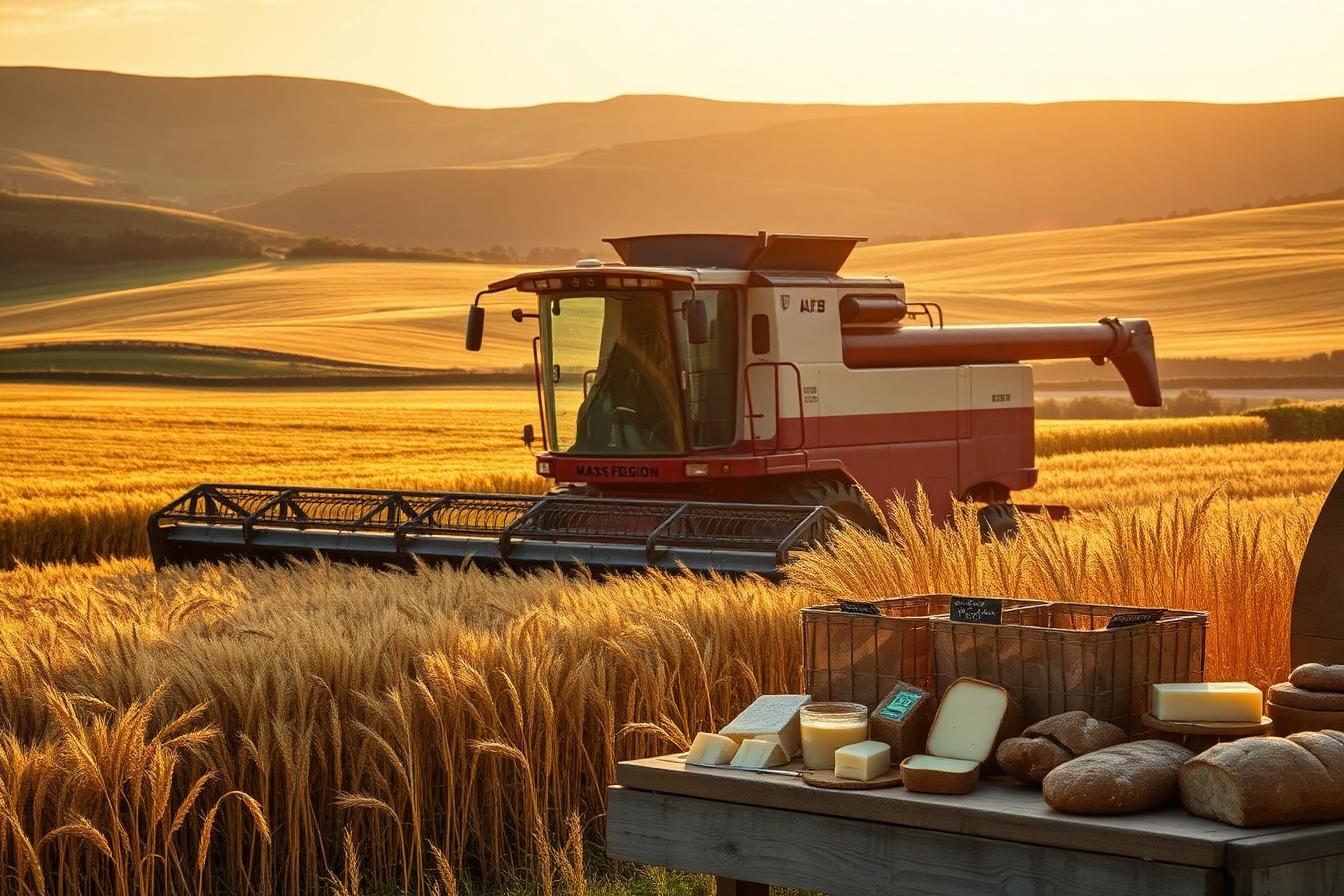
The full Irish breakfast — eggs, rashers, sausages, black and white pudding, grilled tomato, mushrooms, soda bread and a pot of tea — began as the working meal of the small farm: a breakfast built to carry a man through twelve hours of physical labour. Everything on the plate was produced within walking distance of the table, and much of it still is.
Farming is the oldest continuous industry on the island. The same family names appear on the same townlands for centuries; the dry-stone walls, the field patterns and the breeds themselves are a living archive. What farmers did for Ireland is not a footnote to its history — they fed it through penal law and famine, paid the rents that were fought over in the Land War of 1879–82, and won, through the Land Acts, the right to own the ground they worked. That transfer of land from landlord to tenant is one of the most consequential social revolutions in modern Europe, and it was won from the farm gate.
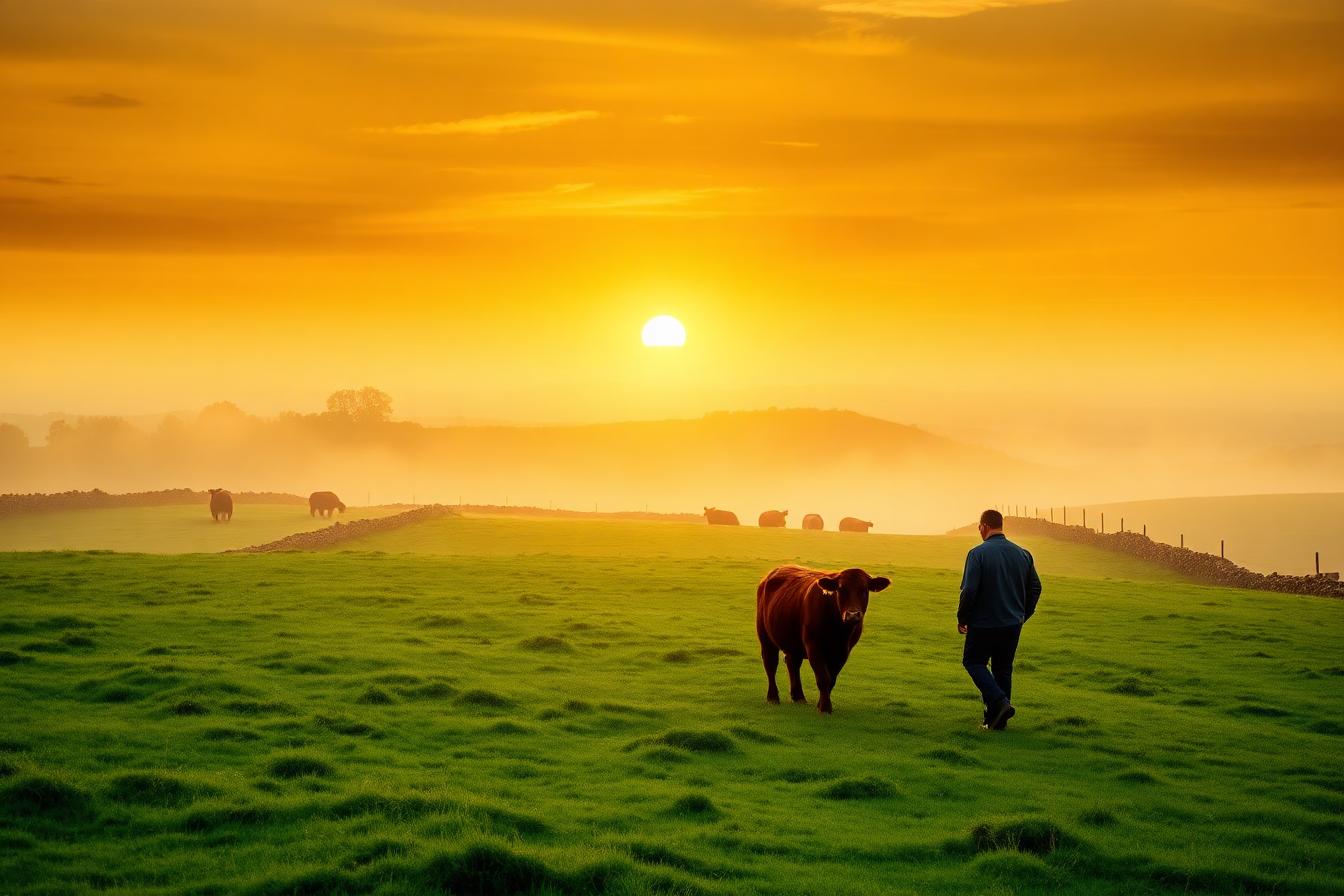
The land itself set the terms. Ireland sits in the path of the Gulf Stream: mild, wet, and green for roughly 300 days of grass growth a year. Cattle and sheep graze outdoors almost year-round — which is why Irish grass-fed beef and butter carry a flavour and colour that grain-fed systems cannot reproduce, and why Irish butter became a benchmark product on tables from Berlin to Boston.
The culture around the farm is famously sociable: the meitheal, the old custom of neighbours gathering to save the hay or the harvest, survived into the tractor age as a habit of mutual aid. The mart, the creamery and the parish hall made the countryside a community rather than a collection of holdings — a friendliness visitors still remark on at every farm gate in the country.
Chapter Twelve — The Squeeze and the Rebuilding
The 1970s and 1980s were brutal decades for Irish farming. Entry into the EEC in 1973 opened markets but also exposed small farms to continental competition; the oil crises, the national recession of the 1980s, milk quotas imposed in 1984, and crippling interest rates forced thousands of families off the land. Farm incomes collapsed, emigration resumed, and many predicted the end of the small family farm altogether.
The rebuilding was deliberate. Co-operatives consolidated into world-scale dairy processors; Teagasc drove science-based breeding and grassland management; and farmers organised. The Irish Farmers' Association — founded in 1955 as the National Farmers' Association — grew into one of the most effective farming lobbies in Europe, negotiating the Common Agricultural Policy in Brussels and defending the family-farm model at home. By the 1990s the sector had turned from survival to export.
Today the IFA represents tens of thousands of farm families and is regarded as among the strongest farmer organisations on any continent — while Irish food and drink exports exceed €16 billion a year, reaching some 180 countries. Quality schemes such as Origin Green and Bord Bia's grass-fed standard made "Irish" a mark of verified quality: the pasture-raised beef and lamb that Europe's best butchers and chefs ask for by name.
Chapter Thirteen — The Harvest of a Nation
Agriculture remains the largest indigenous industry in the Republic, anchoring the rural economy and shaping the very look of the island — the hedgerows, the walled fields, the patchwork of green that defines Ireland in every photograph ever taken of it.
From the breakfast plate to the Brussels negotiating table, the Irish farmer carried the country from subsistence to a food nation with a European reputation for quality — earned acre by acre, generation by generation.
Chapter Fourteen — The Founding
Independence did not arrive as a single event. It came as a sequence: a rising in 1916, a war and a treaty, a Free State in 1922, a civil war, a constitution in 1937, and finally the Republic of Ireland Act in 1949.
What made the state was the unglamorous work in between — writing a constitution, standing up courts and a civil service, electrifying the countryside through the Shannon Scheme, founding a national broadcaster, and later opening a small economy to Europe.
Each generation added a course to the wall the next would stand on.
Chapter Fifteen — The Spine
1916
A rebellion in Dublin proclaims an Irish Republic. It is suppressed within a week, but it reshapes public opinion across the island.
1919–21
The first Dáil Éireann assembles in Dublin and declares independence. The conflict ends with the Anglo-Irish Treaty of December 1921.
1922
A self-governing dominion is established, with its own parliament, courts, civil service and currency built largely from scratch.
1937
A new constitution, approved by referendum, names the state Éire — Ireland — and creates the office of President.
1949
The Republic of Ireland Act comes into force on 18 April, formally ending the state's remaining dominion status.
1973
Ireland joins the European Economic Community, opening markets far beyond its nearest neighbour.
1998
Endorsed by referendum North and South, it sets out a settlement built on consent and shared institutions.
2002
Euro notes and coins replace the Irish pound, completing a currency transition begun in 1999.
Chapter Sixteen — The Land
Ireland is a limestone bowl rimmed by mountains: the Burren's bare pavement, the raised bogs of the midlands, the drumlin country of the border, and the cliffs of the western seaboard. The Shannon, the longest river in these islands, runs through the middle of it.
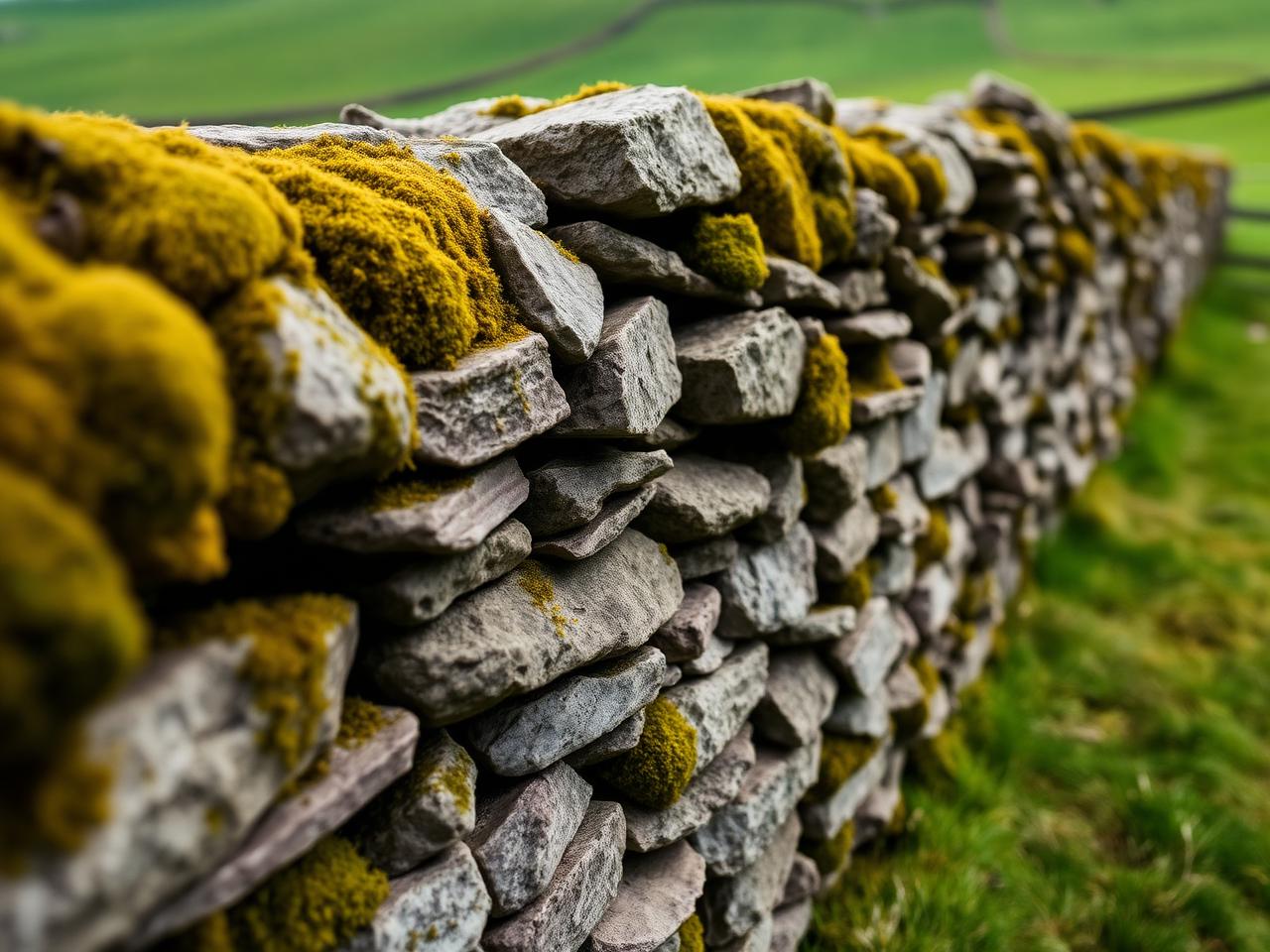
Thousands of miles of dry-stone wall divide the fields — stacked without mortar, held together by weight and fit alone. They are the plainest record of how the place was made.
Chapter Seventeen — The Capital
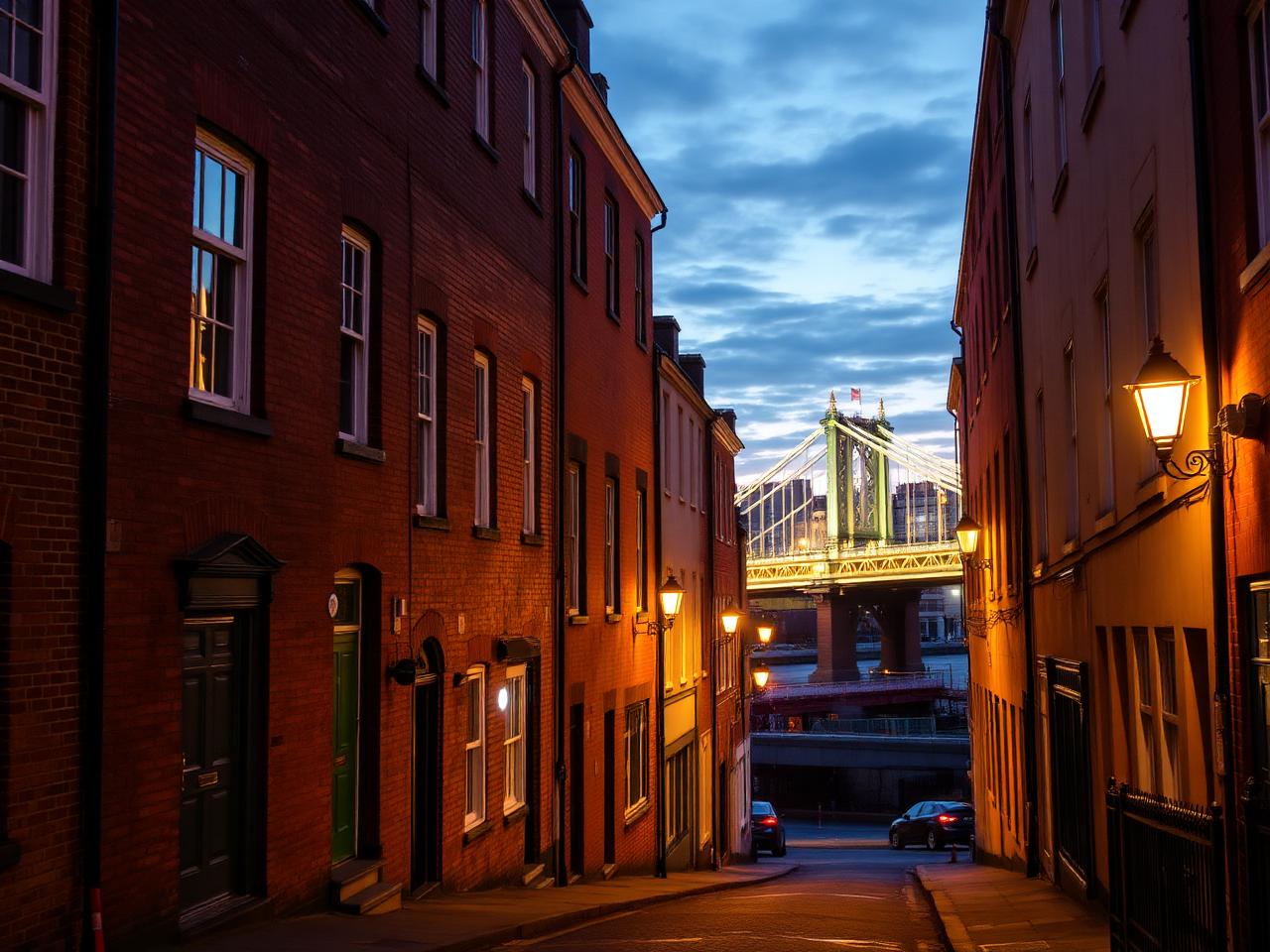
The Oireachtas sits at Leinster House: a Dáil elected by single transferable vote, a Seanad, and a President at Áras an Uachtaráin. Around them stands a city of Georgian terraces, docklands offices and a university library holding the Book of Kells.
Chapter Eighteen — In Brief
Chapter Nineteen — Culture
01
From the illuminated Book of Kells to Joyce, Yeats, Beckett and Heaney — four Nobel laureates in literature from a small island.
02
Fiddle, uilleann pipes, bodhrán and sean-nós singing, carried forward not in concert halls but in kitchens and back rooms.
03
Irish is the first official language and the everyday speech of the Gaeltacht regions along the western seaboard.
Chapter Twenty — Women and Children of the Dark Years
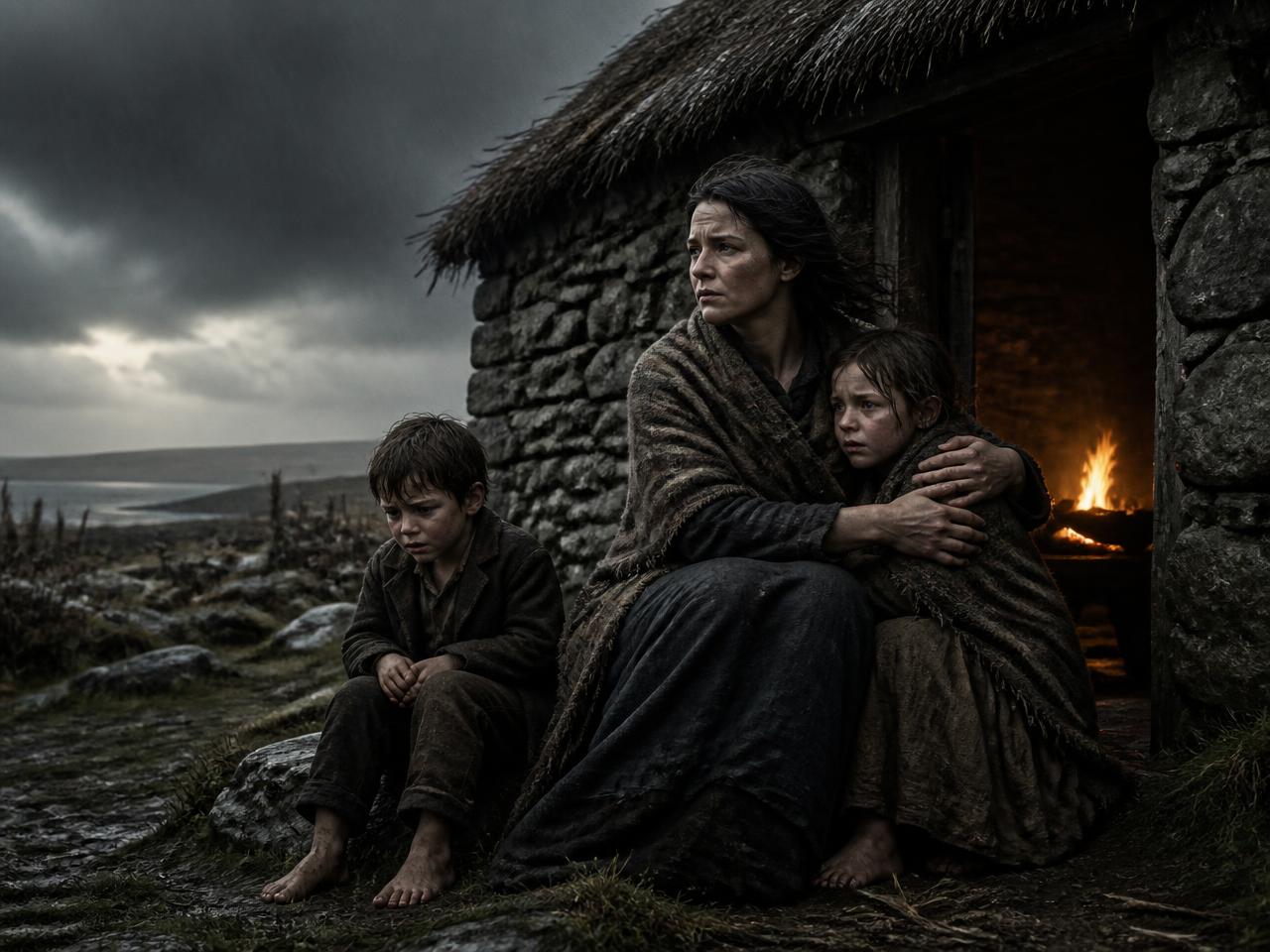
The nineteenth century in Ireland was not one long battlefield, and it is more accurate — and more terrible — to say that the great killers were hunger, eviction and disease. The rebellion of 1798 and its reprisals, the agrarian conflicts of the Land War, and the Great Famine of 1845–52 all fell hardest on the households at the bottom: cottier and labouring families living on a acre or less of rented ground, dependent on the potato for food and on seasonal wages for rent.
Roughly one million people died between 1845 and 1852, and another million emigrated. Most did not die of starvation outright; they died of typhus, relapsing fever, dysentery and the cold, which travelled fastest through workhouses, roadside camps and evicted families sleeping in ditches.
Women carried the household economy. They kept the fire and the pot, reared the hens and the pig that paid the rent, spun and wove, gathered shellfish, nettles and seaweed when the crop failed, walked miles to relief works and soup kitchens, and queued at workhouse gates — where women and children came to make up the majority of inmates. Children as young as eight worked in fields, at the loom or as messengers, and older children raised the younger while parents sought food or work.
Men worked the plot, laboured on public relief schemes for a few pence a day, and defended the cabin against the crowbar brigades that levelled roofs at eviction. When food supplies ran out, whole families took to the roads or to the ships. It was, by every surviving account, a dark and frightening time.
What is remarkable is not that the Irish were unbeatable — many were beaten, and buried — but that the culture was not. Language, music, prayer, storytelling, the memory of who owned what and who lost it: all of it was carried in the heads of people who owned nothing else. The same generations that buried their children also built the mass emigration networks, the Land League, the co-operative movement and the cultural revival that made independence thinkable. That inheritance — Gaelic, Norse and Norman blood alike, since the Hiberno-Norse were long since Irish — was treated as something sacred, and it is why the Republic, when it came, was built as much on culture as on politics.
Chapter Twenty-One — The Cross That Became an Emblem
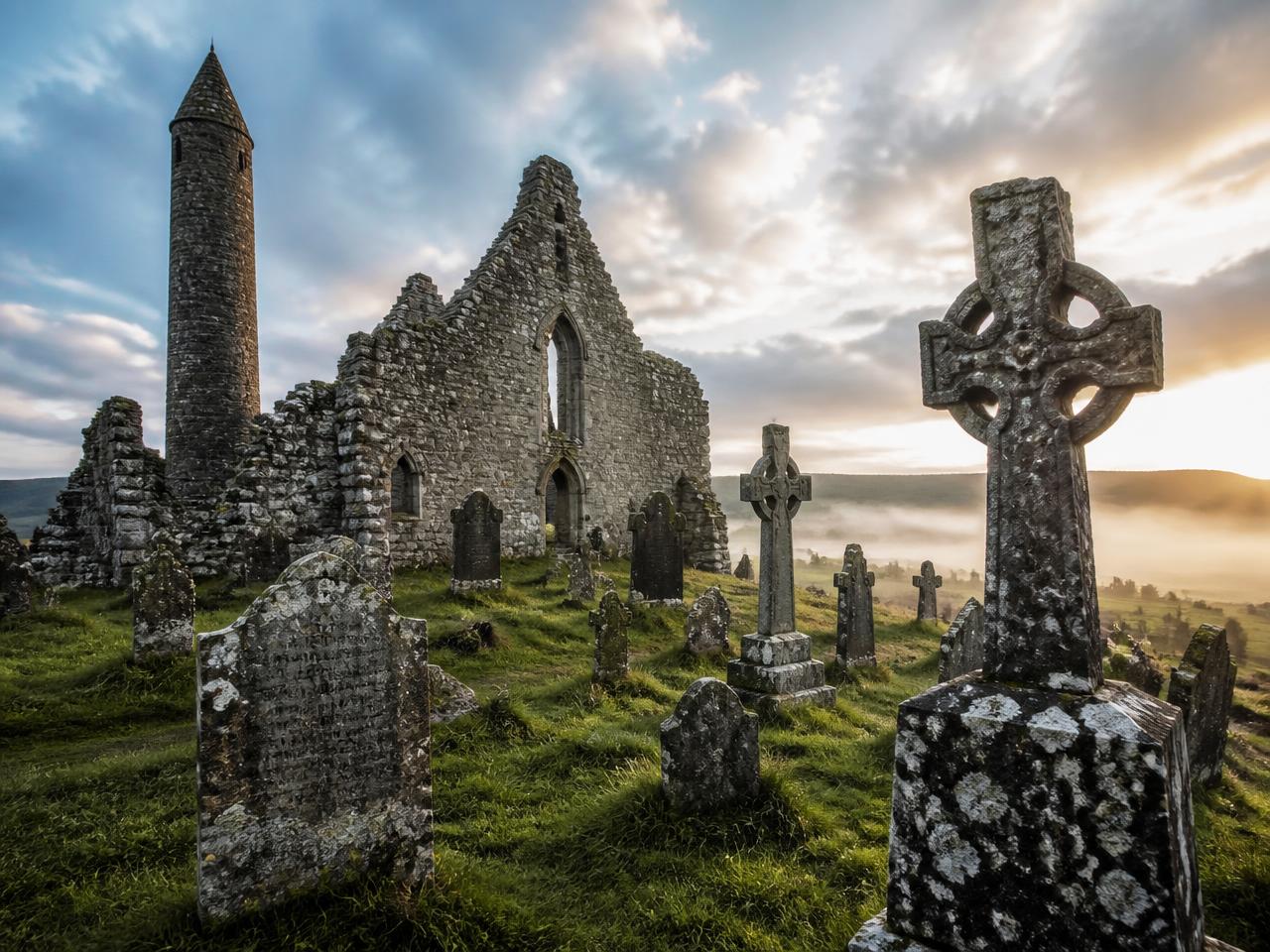
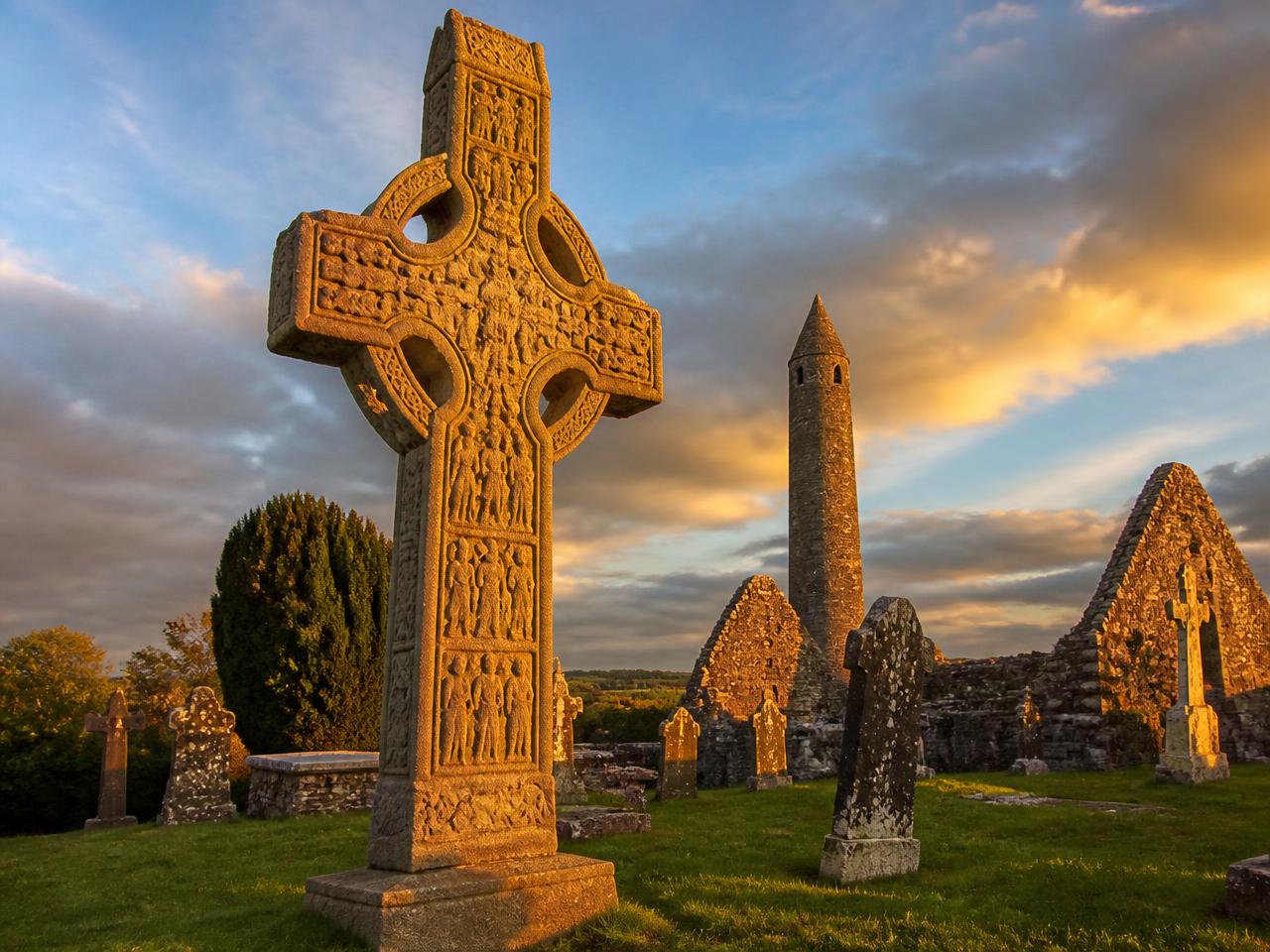
Christianity reached Ireland from the late Roman world in the fifth century — an island Rome never invaded receiving Rome's religion by mission rather than by legion. What Irish craftsmen then did with the Roman cross was distinctive: from roughly the eighth century they carved free-standing stone crosses, up to seven metres tall, with a ring joining the arms to the shaft.
The ring is structurally sensible — it braces the arms of a tall stone cross — and it is also the feature that made the form unmistakably Irish. The popular story that Saint Patrick laid a Christian cross over a pagan sun symbol is folklore, not documented history; scholars more cautiously trace the ringed form to metalwork crosses and painted manuscript crosses of the early medieval church.
8th–10th century
The great scripture crosses at Monasterboice, Clonmacnoise, Kells, Ahenny and Moone carry carved panels of Adam and Eve, the Last Judgement and the Crucifixion — teaching pictures for a largely non-reading congregation, and markers of monastic authority over land and sanctuary.
19th century
The Celtic Revival brought the ringed cross back as a gravestone and national symbol, especially after Catholic Emancipation. It stands over Irish graves from Glasnevin to Boston, and marks Famine burial grounds and the graves of the emigrant dead worldwide.
Today
Interlace and the ringed cross now stand for Ireland itself — on memorials, in Irish-American parishes, on the covers of the annals and in the design language of the state's cultural institutions. A Roman inheritance, made Irish, and given back to the world.
Chapter Twenty-Two — The Galleries
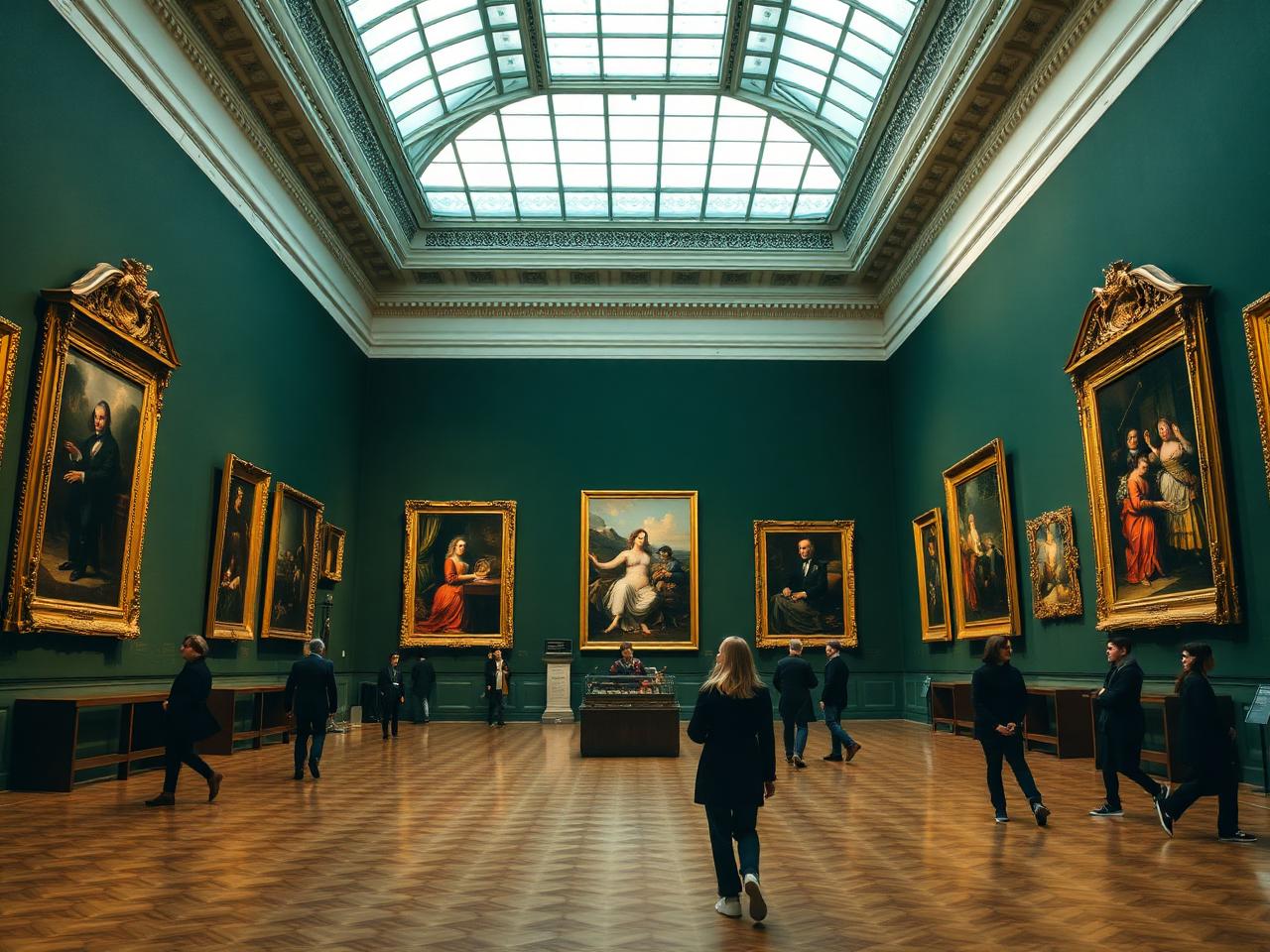
The National Gallery of Ireland opened on Merrion Square in 1864, founded by act of parliament in 1854 and driven largely by William Dargan, the railway builder whose 1853 Dublin Exhibition proved the public appetite for art. It opened with little more than a hundred pictures. It now holds some seventeen thousand works, including Caravaggio's The Taking of Christ, identified in a Jesuit house on Leeson Street in 1990 after decades hanging unrecognised.
Around it grew a wider system: the Hugh Lane Gallery, opened in 1908 as the first known public gallery of modern art anywhere in the world; the Crawford in Cork; the Ulster Museum in Belfast; the Irish Museum of Modern Art at the Royal Hospital Kilmainham from 1991. Entry to the permanent collections is generally free — a deliberate policy, and one reason gallery culture in Ireland is genuinely popular rather than elite.
Irish art carries abroad because it carries a story. Jack B. Yeats painted the crowds, races and grief of an emerging nation; Paul Henry made the western landscape legible to the world; Harry Clarke's stained glass is collected on several continents; Louis le Brocquy, Mainie Jellett and Sean Scully put Irish work into international modernism. Add the Book of Kells at Trinity College and the manuscript and metalwork tradition behind it, and Irish visual culture reaches audiences far larger than the island that produced it.
Chapter Twenty-Three — The Museums
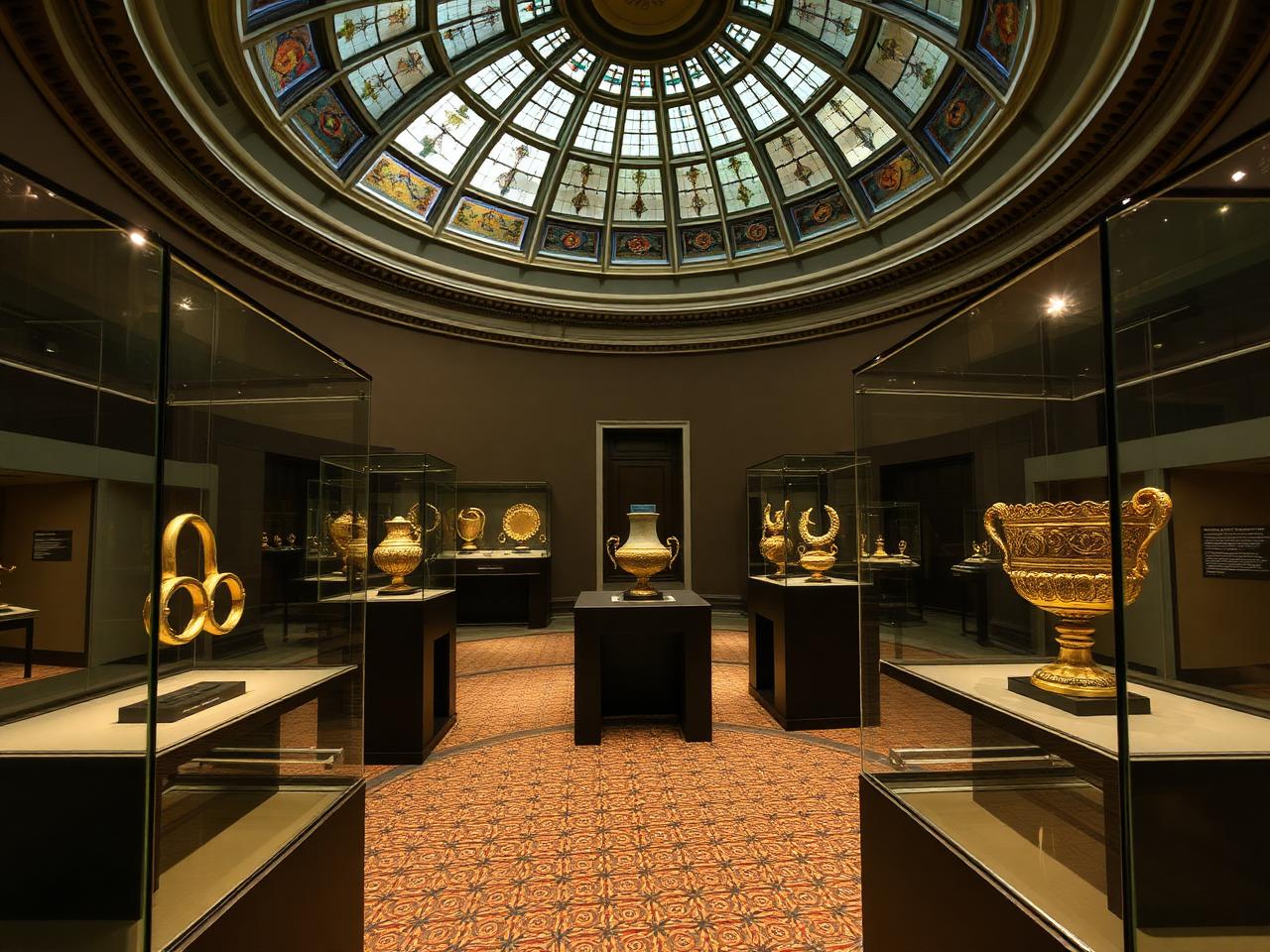
The National Museum of Ireland, opened on Kildare Street in 1890, is the state's keeper of the material past. Its Archaeology collection holds the Ardagh Chalice, the Tara Brooch, the Derrynaflan hoard and one of the greatest collections of prehistoric gold in western Europe, alongside the bog bodies of the Iron Age. Its other branches cover Decorative Arts and History at Collins Barracks, Country Life at Turlough Park in Mayo, and Natural History on Merrion Street.
It stands for custody. After the Public Record Office burned in 1922, Ireland understood better than most nations what it means to lose the evidence of your own past. A museum in that context is not decoration — it is proof of continuity, held in trust for people whose ancestors were rarely allowed to own anything at all. Admission is free, and objects are held on behalf of the public rather than a court or a crown.
Its popularity abroad comes from the quality of what survived: early medieval Irish metalwork and manuscripts are among the finest produced anywhere in Europe between the seventh and ninth centuries, and the diaspora of some seventy million people of Irish descent worldwide gives those objects a personal weight far beyond their scholarship.
Chapter Twenty-Four — The Café and the Counter
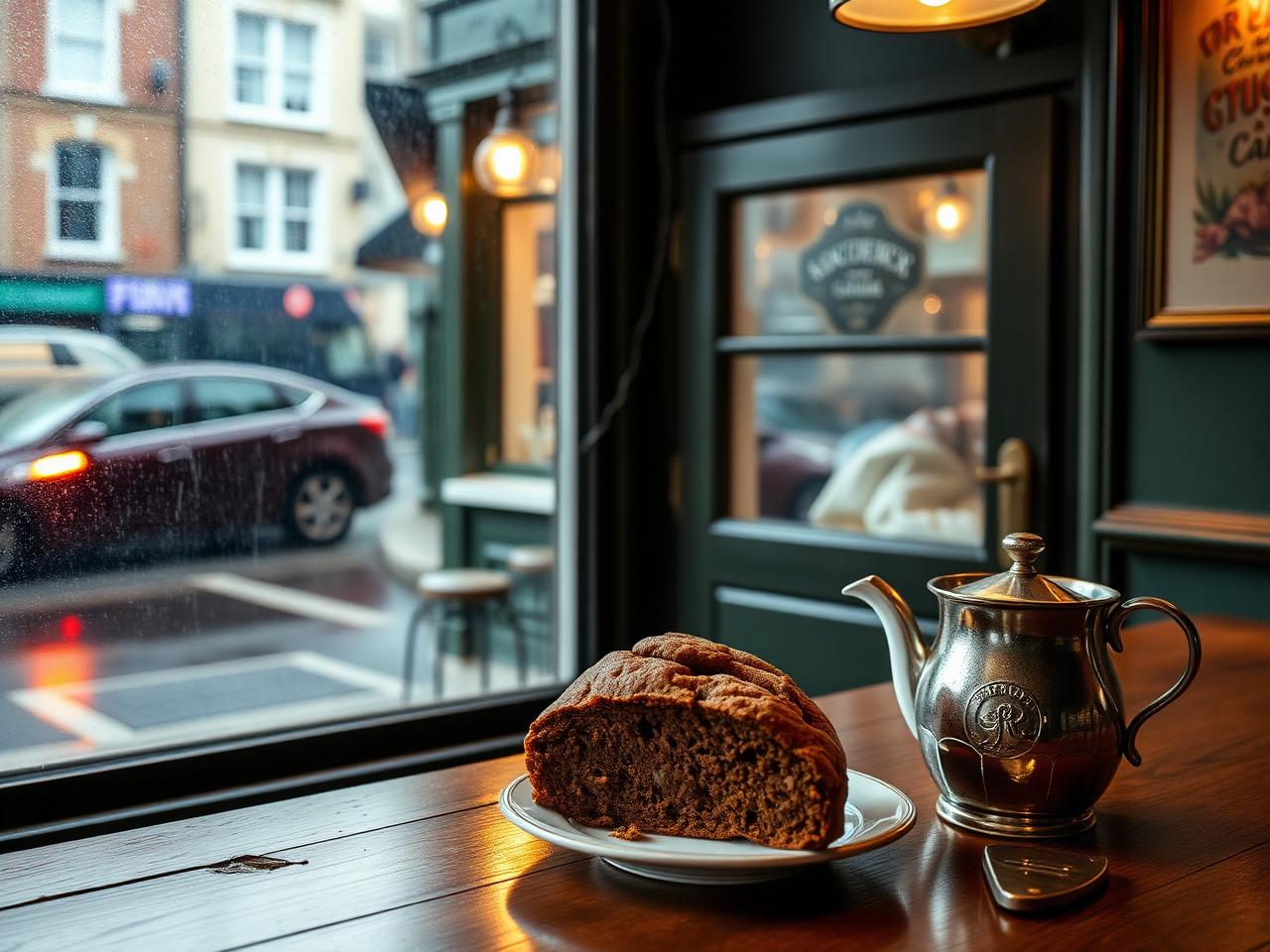
Ireland's café culture is younger than its pub culture, but it grew from the same instinct: a room where you are expected to stay. Bewley's Oriental Café opened on Grafton Street in 1927, with Harry Clarke's stained-glass windows set into its walls, and for generations it was where Dublin met, argued, wrote and waited out the rain.
Since the 1990s the small independent café has spread into every county — often serving the produce of the farms in the chapters above: soda bread and brown bread, farmhouse butter and cheese, smoked salmon, scones, and coffee taken seriously. What makes it Irish is not the menu but the manner: the conversation with a stranger, the refusal to hurry anyone out, the assumption that being welcomed is part of what you were served.
Chapter Twenty-Five — The Pub, the Session and the Singing
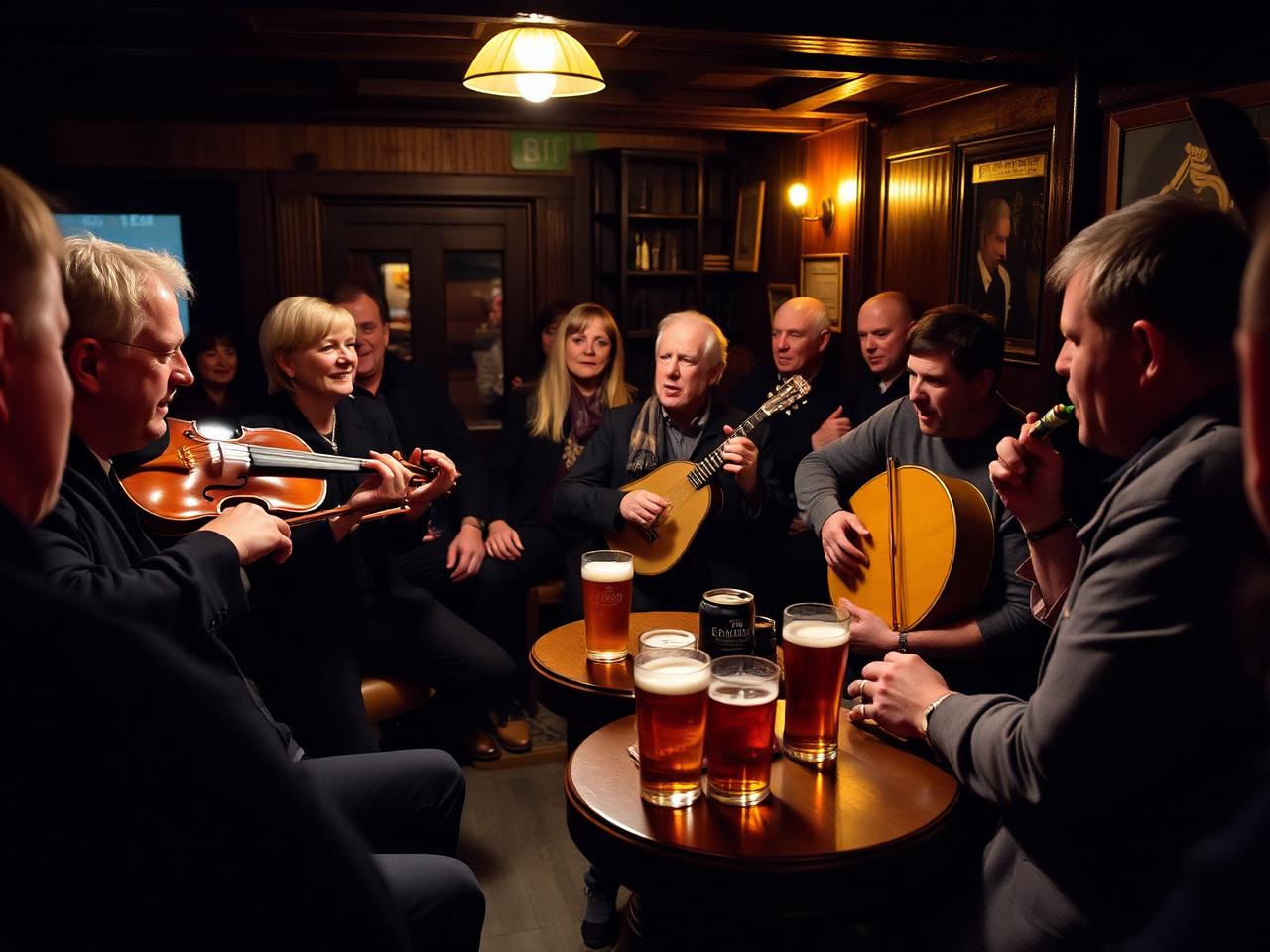
The house
The Irish pub descends from the shebeen and the licensed public house, and often from the grocer-bar that sold flour and boots at one counter and porter at the other — several still trade that way. Sean's Bar in Athlone claims a lineage back to the tenth century. The pub was the parish's meeting hall, labour exchange, post-funeral gathering and courthouse of opinion.
The session
The seisiún — fiddle, flute, uilleann pipes, concertina, bodhrán, banjo — is played in a circle, not facing an audience. Tunes are learned by ear and passed on. Comhaltas Ceoltóirí Éireann, founded in 1951, gathered and taught that repertoire when it was thinning; the Fleadh Cheoil now draws hundreds of thousands each year.
The singing
When an unaccompanied sean-nós singer starts, the pub stops talking — an old and strictly kept courtesy. Emigration songs, rebel songs, laments and love songs carried the memory of events that were, for long periods, unsafe to write down. Set dancing and step dancing on a flagged floor do the same work with the feet.
This is the honest reason Irish people are proud of it: the pub and the session were where a suppressed culture stayed alive in company, without permission, at no cost to enter. That habit travelled — the Irish pub is now a fixture in every major city on earth, and remains the most recognisable cultural export the island has ever made.
Chapter Twenty-Six — The Harp and the Emblems
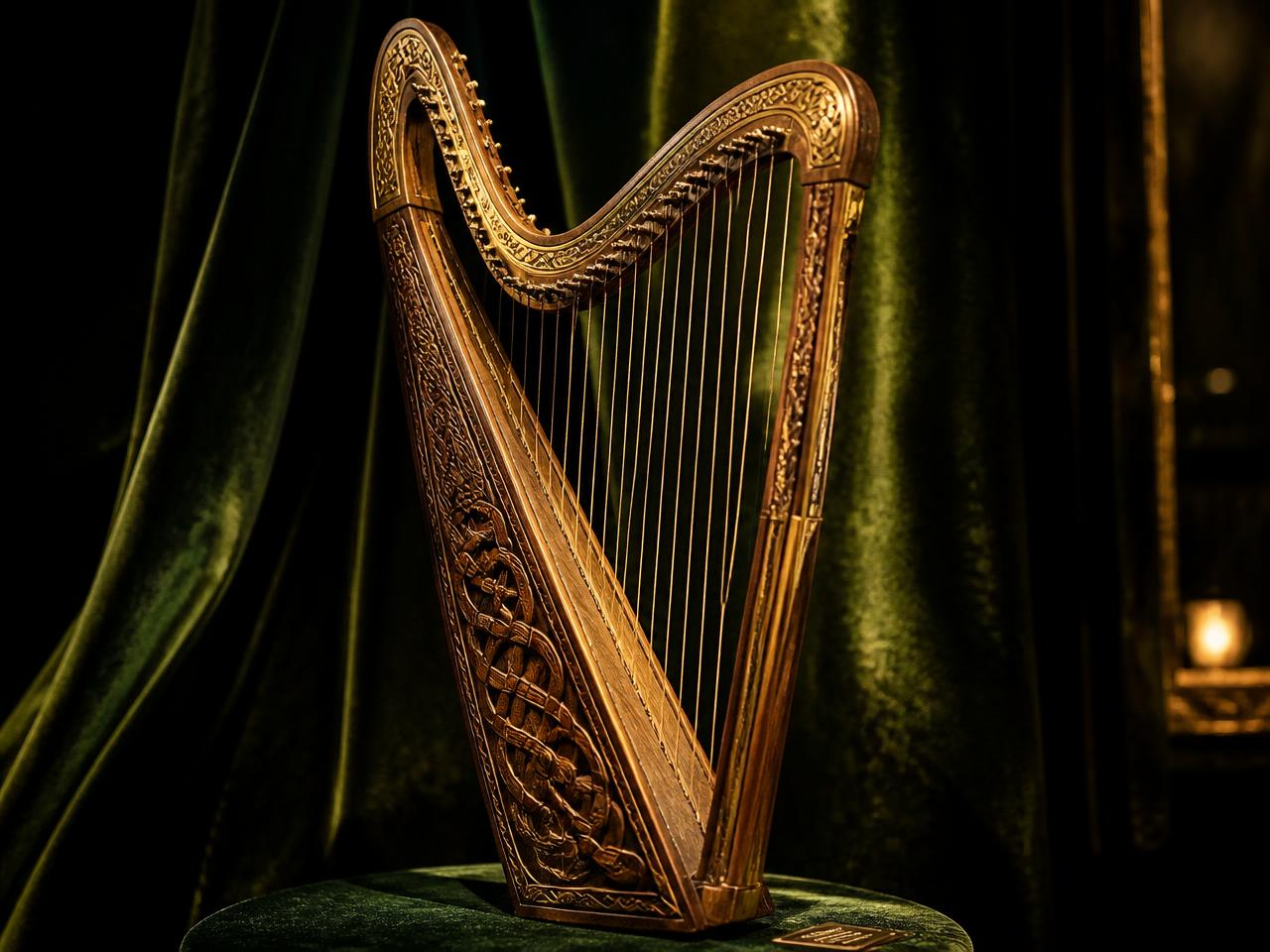
The Irish harp appears on the state's coat of arms, on the seals of the President and the Government, on Irish coinage and on the cover of every Irish passport. No other sovereign state uses a musical instrument as its national symbol.
In Gaelic society the harper held rank. The cláirseach — a wire-strung harp played with the fingernails, its soundbox carved from a single block of willow — accompanied the poets who recorded genealogy, law and the deeds of a lordship. To keep a harper was to keep your history spoken aloud. The fourteenth-century Trinity College Harp, on which the state emblem is modelled, survives in Dublin as the oldest Irish harp we have.
Because harpers carried memory, the crown treated them as a political threat: under Tudor policy harpers were proscribed and their instruments ordered destroyed, and the tradition was nearly extinguished. It was rescued at the Belfast Harp Festival of 1792, where Edward Bunting transcribed the tunes of ten surviving harpers — including the blind Denis Hempson, born in 1695 — and preserved much of the repertoire of Turlough O'Carolan. By the eighteenth century the harp was already the emblem of Irish resistance, worn on the flags of the United Irishmen. When independence came, it was chosen as the emblem of the state: sovereignty expressed as culture rather than as conquest.
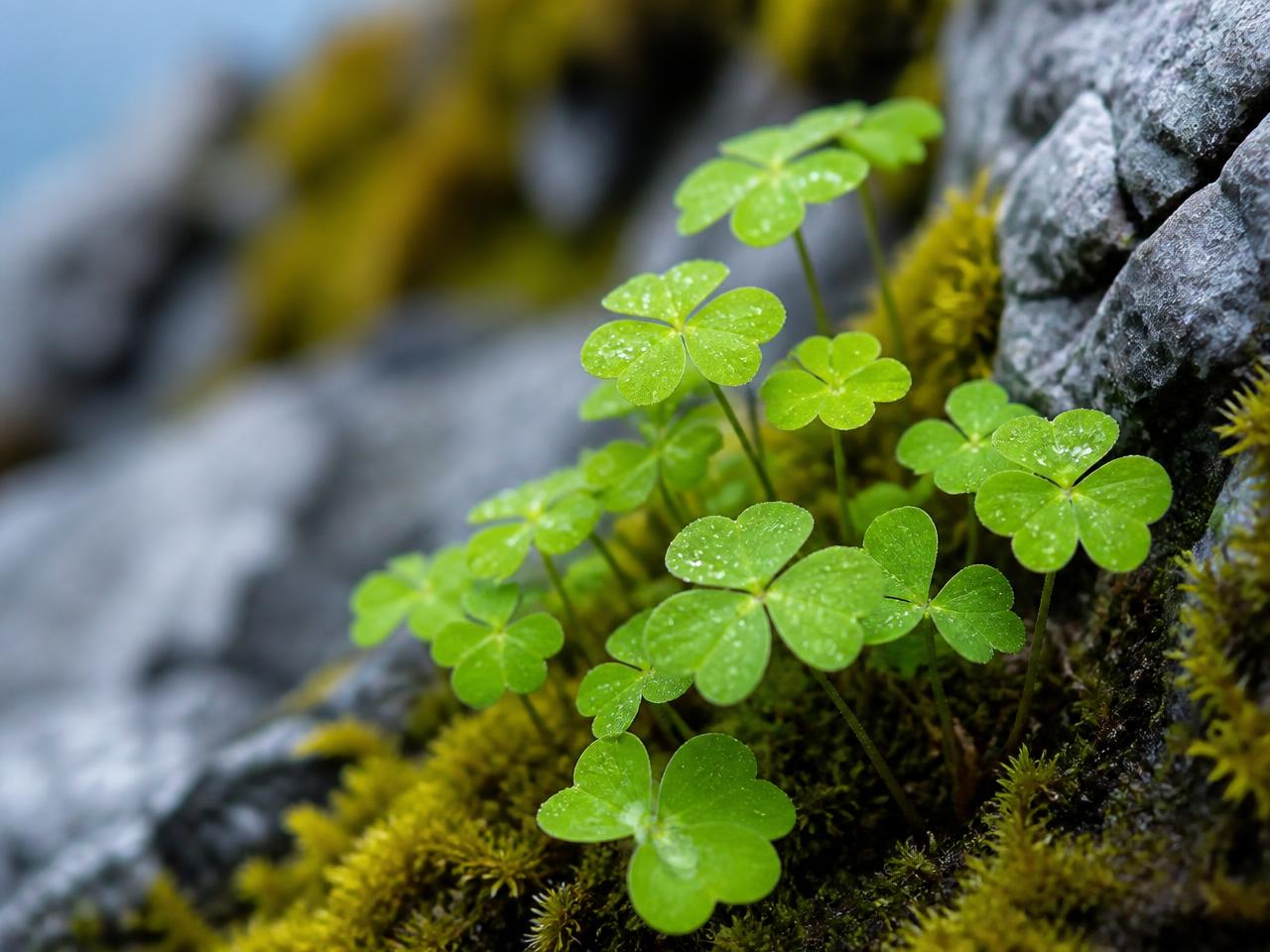
Tradition holds that Saint Patrick used the three leaves of the shamrock to explain the Holy Trinity — Father, Son and Holy Spirit — to a people already fluent in triads. The story is not found in the earliest lives of Patrick and appears in writing only much later, but the emblem itself is old and real: it became a badge of Irish identity, was worn in defiance in the eighteenth and nineteenth centuries, and stands today for faith, renewal and luck.
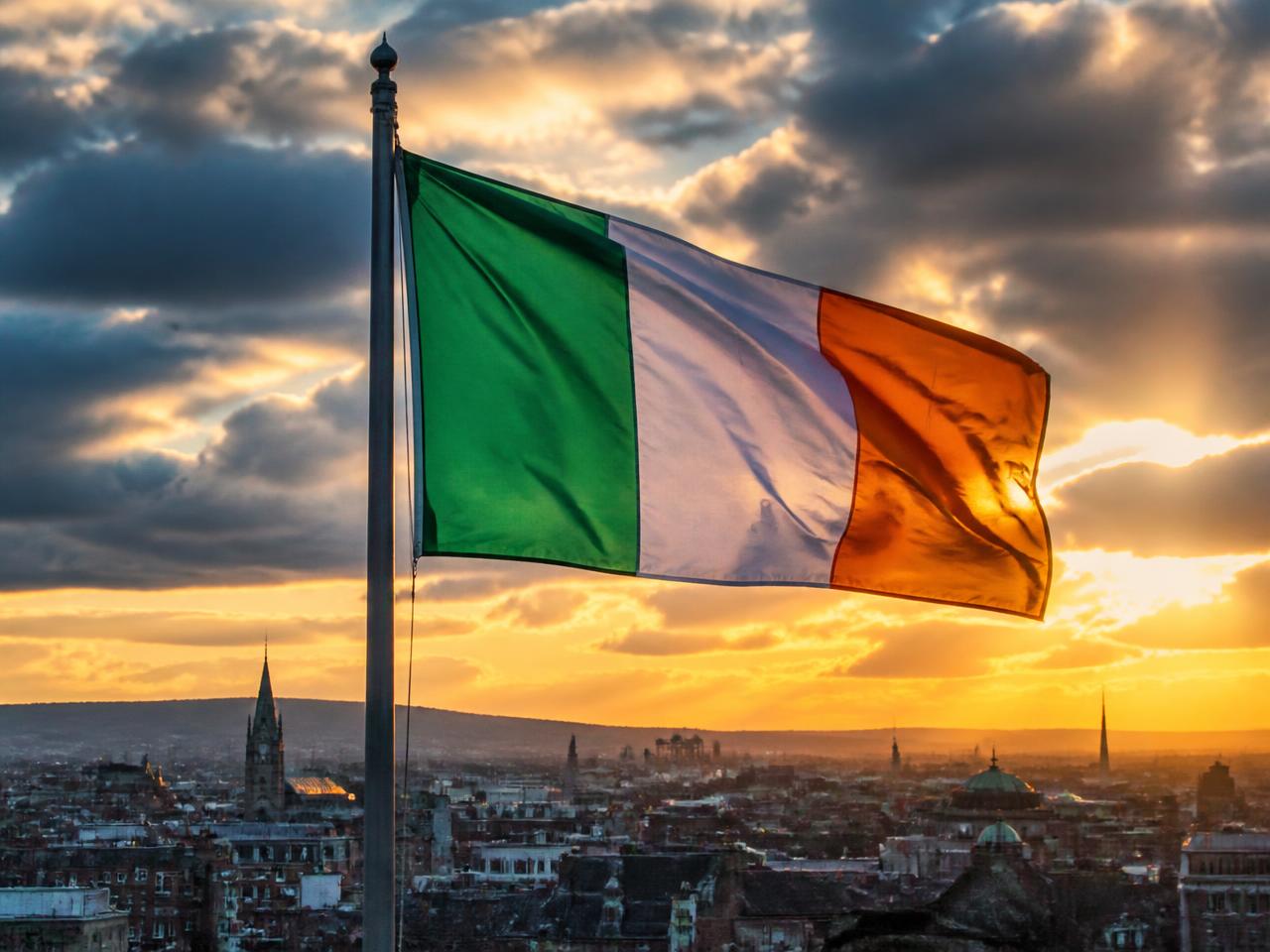
Presented to Thomas Francis Meagher in 1848 and first flown publicly in Waterford that year, the flag was designed as a statement of peace. Green stands for the Gaelic and Catholic tradition, orange for the Protestant and Williamite tradition, and the white between them for a lasting truce between the two. Flown over the GPO in 1916 and adopted by the Free State, it was given constitutional standing as the national flag in 1937 — a flag that names a division and asks for peace in the same breath.
Chapter Twenty-Seven — The Yellow Ford, 1598
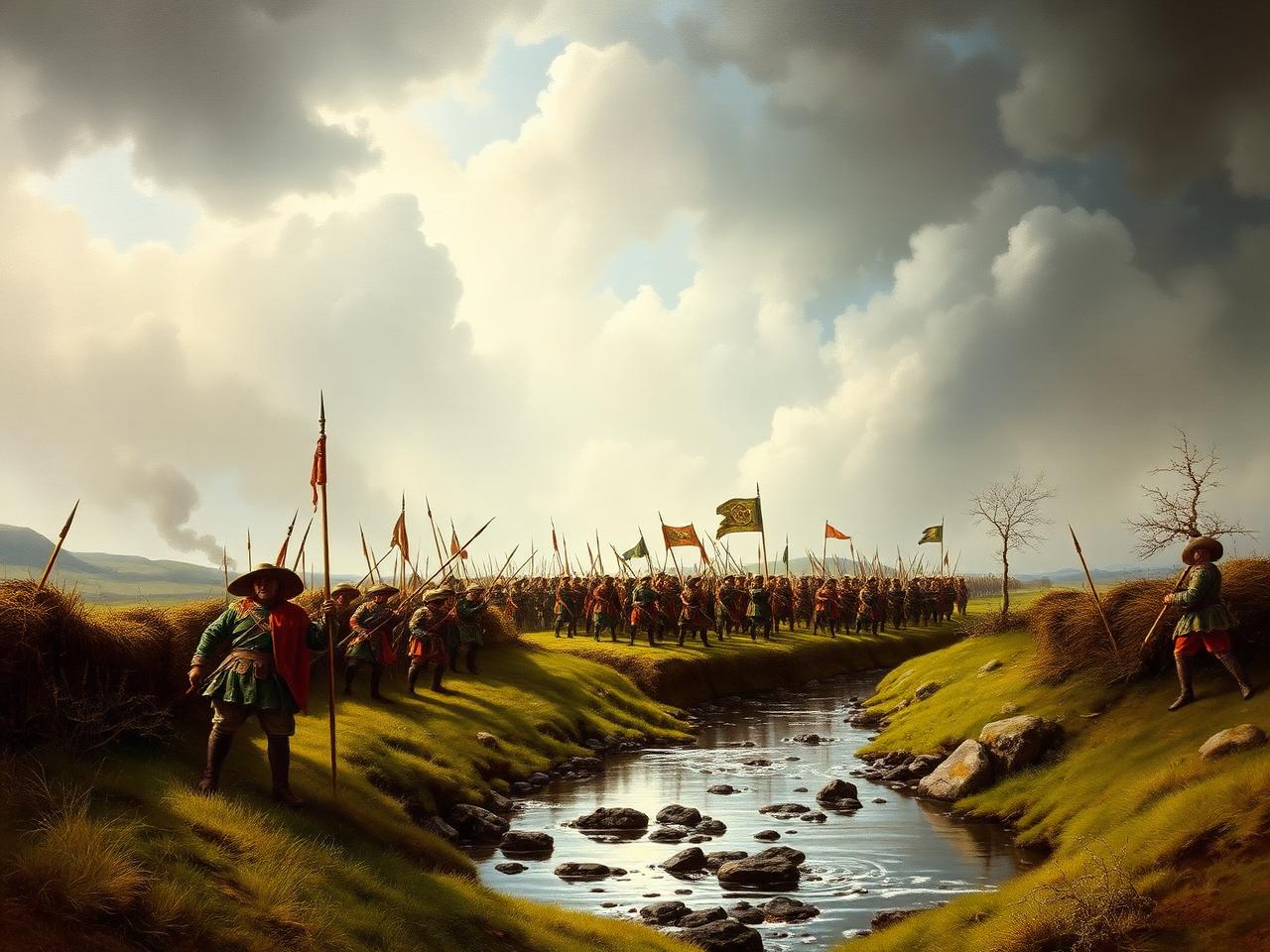
On 14 August 1598, on marshy ground beside the Callan river north of Armagh, an English column of roughly four thousand foot and three hundred horse marched to relieve the isolated Blackwater Fort. It was commanded by Sir Henry Bagenal, Marshal of the Army — and it never arrived.
Hugh O'Neill, Earl of Tyrone, had spent years turning Gaelic levies into a modern force: pikemen drilled in the Spanish manner, musketeers paid in coin, powder bought through Scottish and Iberian merchants. With Hugh Roe O'Donnell and Hugh Maguire he chose the ground and prepared it. A trench a mile long, five feet deep and thorn-hedged on its lip, was dug across the line of march; the bog was left to do the rest.
The English column, strung out and separated by soft ground, was cut into pieces. A powder barrel exploded in the centre; the vanguard was pinned at the trench; Bagenal raised his visor to see the field and was shot dead through the face. Between eight hundred and two thousand crown soldiers were lost, along with their guns, colours and supplies. Blackwater Fort surrendered. For two years the crown's authority in Ulster effectively ceased to exist, and the rebellion became a national war that reached as far as Munster.
It was the high-water mark of Gaelic Ireland in arms. Its lesson was learned by both sides: O'Neill won by fighting on ground of his choosing, and would lose at Kinsale in 1601 the moment he agreed to fight in the open on someone else's.
Chapter Twenty-Eight — Benburb, 1646
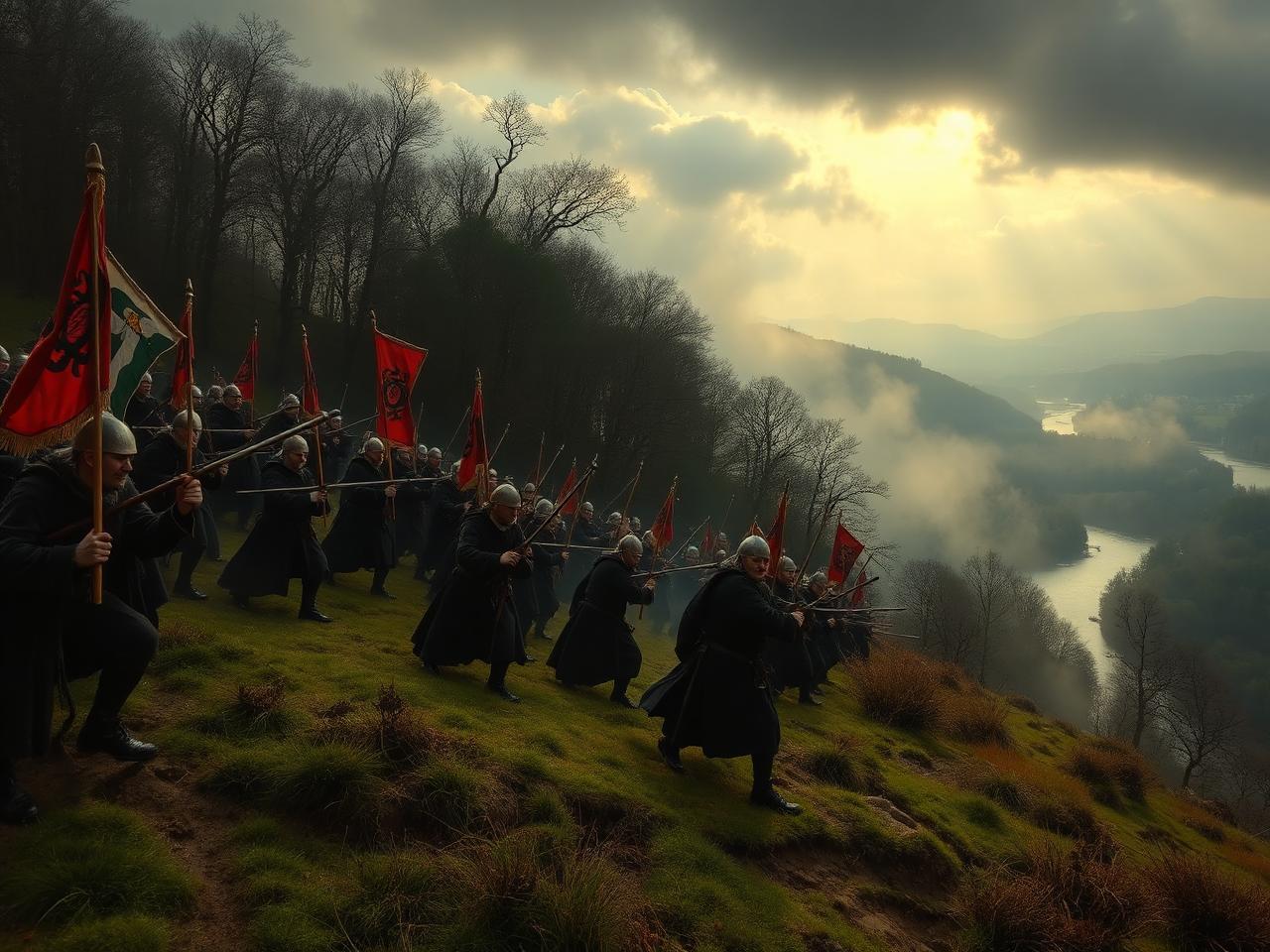
Ask which battle of the seventeenth century Ireland won, and the answer is Benburb, fought on 5 June 1646 above the River Blackwater in County Tyrone. Owen Roe O'Neill — nephew of Hugh O'Neill, trained for forty years in the Spanish service in Flanders — commanded the Ulster Army of Confederate Ireland, some five thousand foot and five hundred horse. Against him came Robert Monro with a Scottish Covenanter and Ulster settler army of comparable size and better guns.
O'Neill won the battle before a shot mattered. He manoeuvred so that Monro was forced to march his men roughly fifteen miles in summer heat to reach him, then declined to engage until the late evening, when the setting sun and the wind blew directly into Scottish faces. He blocked the ford against Monro's expected reinforcements from Coleraine. Only then did he let the lines meet.
His pike blocks, drilled in the continental style with shortened pikes for the push, broke Monro's front and drove it back onto the river. The Covenanter army disintegrated; contemporary accounts put Scottish and settler dead at around three thousand against a few hundred Irish. Monro escaped bareheaded, leaving his artillery, tents and colours behind.
It was the most complete Gaelic victory of the century — and it changed almost nothing, because the Confederate leadership in Kilkenny was split between those who wanted a settlement with the king and those who wanted a Catholic Ireland guaranteed. O'Neill was never allowed to exploit it. Ireland's tragedy in that century was rarely a want of courage; it was a want of unity behind the courage.
Chapter Twenty-Nine — Aughrim, 12 July 1691
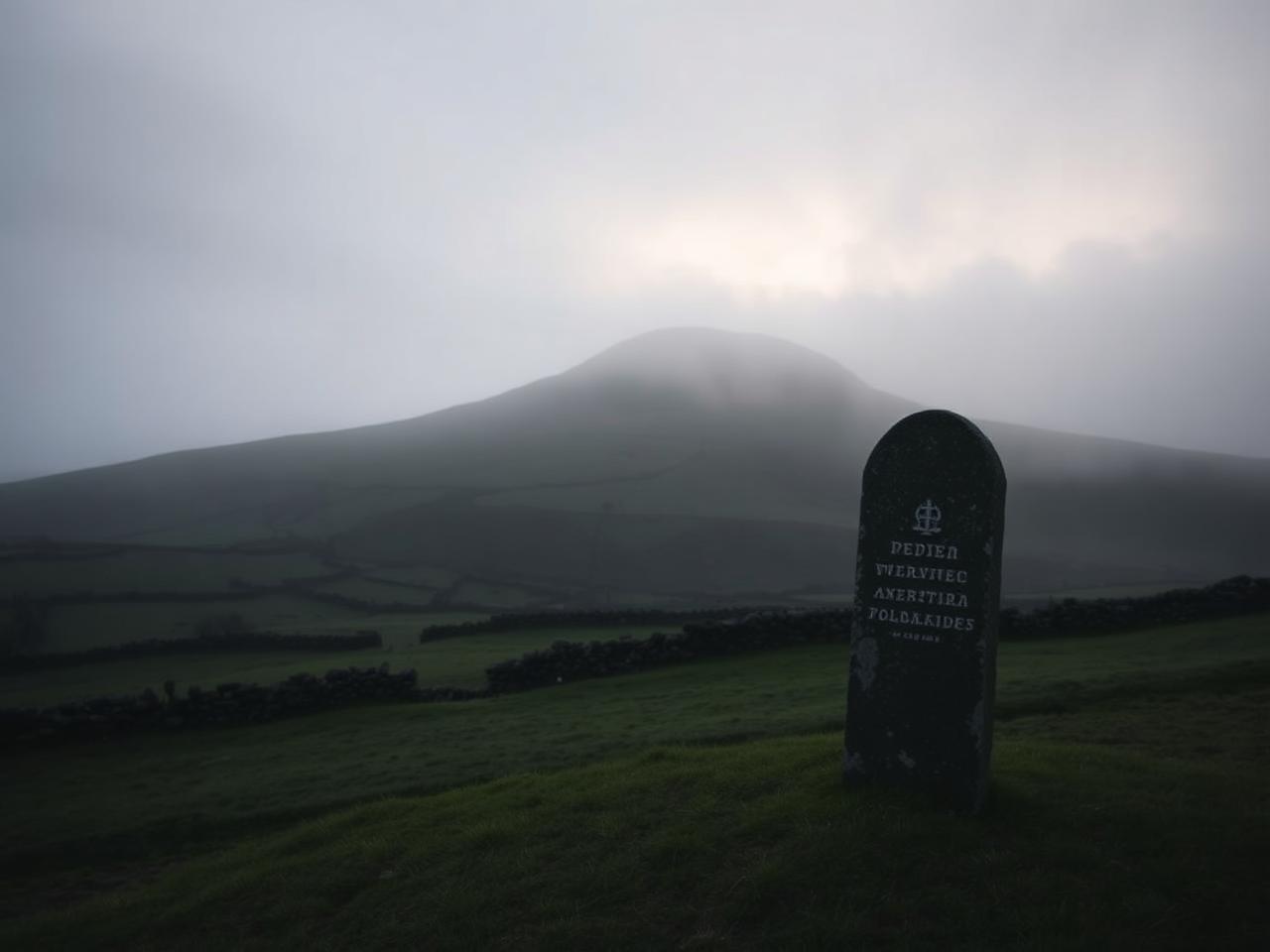
The Boyne is remembered; Aughrim decided. A year after William's crossing of the Boyne, the Jacobite army — Irish regiments under the French general Charles Chalmont, Marquis de St Ruth — held a two-mile ridge along Kilcommadan Hill in County Galway, with bog in front and the pass of Urraghry on one flank and the castle of Aughrim on the other. It was the strongest defensive position either army fought over in the whole war.
Godert de Ginkel attacked in the late afternoon of 12 July 1691. For hours the Williamite infantry floundered in the bog and was thrown back; the Irish counter-attacks came so close to breaking the centre that St Ruth is said to have cried that he would drive the enemy to the gates of Dublin. Then a single cannon shot took his head off as he rode down to lead the cavalry charge that would have finished it.
No one else knew the plan. The cavalry on the left, commanded by Henry Luttrell, withdrew — a decision still argued over three centuries later — and the Williamite horse forced the causeway by Aughrim castle, where the defenders discovered their spare ammunition did not fit their muskets. The line rolled up from the flank in the dusk. Around seven thousand men died on that hillside, the greatest loss of life in a single day anywhere in Irish history.
Galway surrendered within a fortnight; Limerick followed in October, and the Treaty of Limerick sent the Wild Geese to France. The Orange commemoration of 12 July falls on Aughrim's date, though it now chiefly marks the Boyne — the two victories fused into one after the calendar reform of 1752. The dead of Aughrim lay unburied on the ridge for months, and the memory of it entered Irish poetry as the moment the old order ended.
Chapter Thirty — Four Battles That Made the Country
Four engagements are cited more than any others when Ireland's history is told as a sequence of fields. Each marks the end of one order and the start of another — and each is more complicated than the version taught in a single sentence.
Brian Bóruma, High King, faced the men of Leinster allied with the Hiberno-Norse of Dublin under Sigtrygg Silkbeard, reinforced by Sigurd of Orkney and Brodir of Man. It was not Ireland against the Vikings: Norse fought on both sides, and Sigtrygg watched from the city walls. Brian's side won and Brian himself was killed in his tent as the rout passed, along with his son Murchad. Dublin remained Norse in character, but the notion of a single high kingship worth dying for entered Irish memory permanently.
Hugh O'Neill's destruction of Bagenal's relief column, described in Chapter Twenty-Seven: a Gaelic army beating a modern European one in the field by engineering, discipline and choice of ground. It forced Elizabeth I to commit the largest army England had ever sent anywhere, and it made the Nine Years' War a contest for the whole island.
William III's crossing of the river near Oldbridge against James II. Fewer than two thousand died in total; it was not the slaughter Aughrim would be. Its significance was political and European: James left the field and then the country, William held Dublin, and a war over the English and Scottish thrones — with the Pope's diplomatic sympathies on William's side against Louis XIV — was settled on Irish soil, at Irish expense.
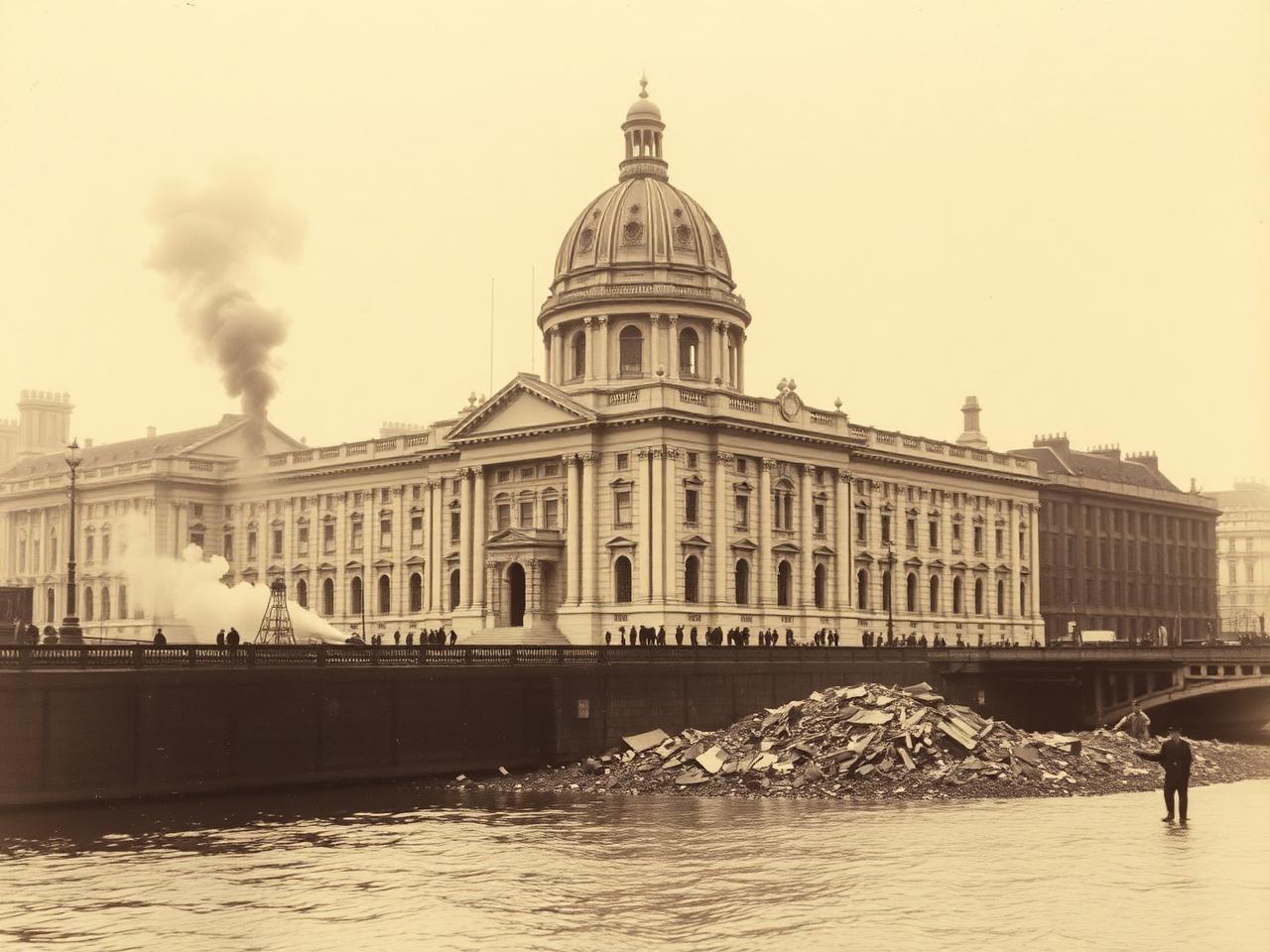
The opening battle of the Civil War, when Provisional Government troops shelled the anti-Treaty garrison holding Dublin's Four Courts with field guns supplied by the British. On 30 June the Public Record Office in the complex exploded, destroying seven centuries of Irish records. Irishmen who had fought side by side two years earlier now killed one another for a week in their own capital.
Honour after battle — the Irish custom of burying and naming the dead of both sides, from the cairns of Aughrim to the Glasnevin necrology of 1916–1923, has done more for reconciliation than any victory ever did.
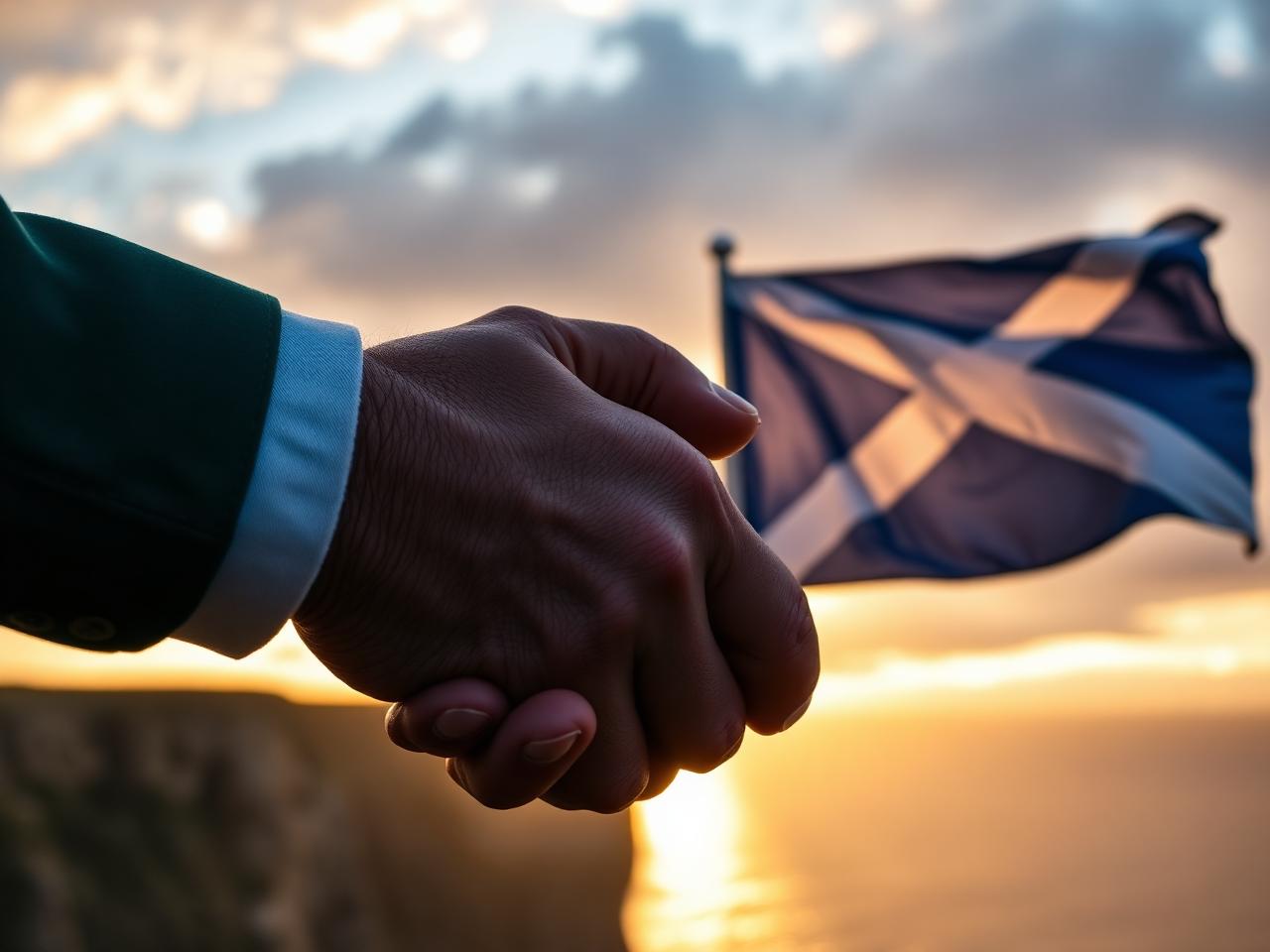
Chapter Thirty-One — Ireland and Scotland, Hand in Hand
The North Channel is twelve miles wide at its narrowest. For most of recorded history it was not a border but a road. Around AD 500 the Gaelic kingdom of Dál Riata spanned both shores — the Glens of Antrim and the coast of Argyll under one royal kindred, traditionally associated with Fergus Mór mac Eirc. The Irish were called Scoti in Latin; the land they settled took their name. Scotland is, quite literally, named after the Irish.
In 563 Colum Cille — Columba — sailed from Derry to Iona and founded the monastery that would convert much of northern Britain, school its kings and produce the illuminated gospel books of the Insular tradition. At the Convention of Druim Cett in 575 the kings of Dál Riata and of the northern Uí Néill met with Columba as mediator to settle the obligations of the two shores. Gaelic crossed with the boats and became the Scottish Gaelic still spoken in the Hebrides today.
The traffic ran both ways. Scottish gallowglass — the gallóglaigh, heavy axemen of Hebridean descent — served Irish lords from the thirteenth century and became Irish families: MacSweeney, MacDonnell, MacCabe, MacSheehy. Edward Bruce's campaign of 1315–18 was a Scottish second front in the war against the English crown, fought in Ireland with Irish allies. Later, Ulster's plantation brought Scots the other way, and the tangle that made became the hardest knot in Irish politics.
What survives is a kinship neither state has ever needed to explain: shared music and metre, shared saints, shared emigration to the same American and Canadian ports, shared humour, and a mutual respect that shows itself every time the two peoples meet. Two small nations beside a large one, standing hand in hand and looking each other in the eye.
Chapter Thirty-Two — Stone Upon Stone: The Castles
Ireland is one of the most heavily castellated countries in Europe. A broad inventory of every recorded site of a castle, fortified house or partial ruin reaches roughly thirty thousand across the island; tourism bodies usually work with a figure nearer three thousand recognisable, visitable fortifications; and more than seven thousand late-medieval tower houses still stand in some form in the fields. Three of them tell the whole story of conquest, resistance and handover.
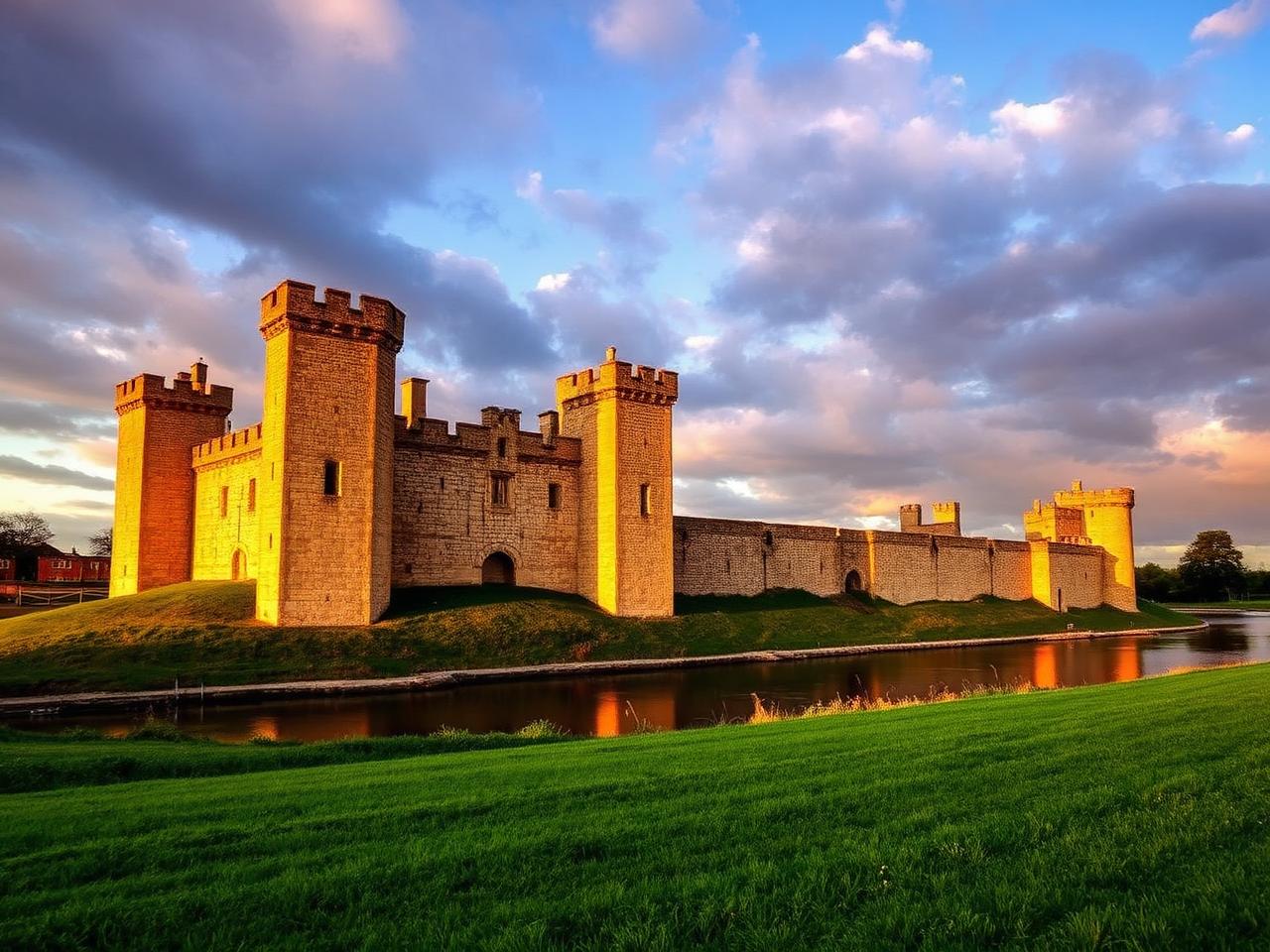
Begun in 1173 by Hugh de Lacy, to whom Henry II had granted the whole Lordship of Meath, Trim is the largest Anglo-Norman stone castle in Ireland — some three acres within its curtain wall. Its cruciform keep, twenty-sided and three storeys high, was designed so that no attacker could approach a face without being flanked. The first timber castle was burned within a year by Ruaidhrí Ua Conchobair; the stone one that replaced it took thirty years to complete and was never taken by storm. It stands today as a magnificent ruin, open to visitors, its keep floors restored for climbing.
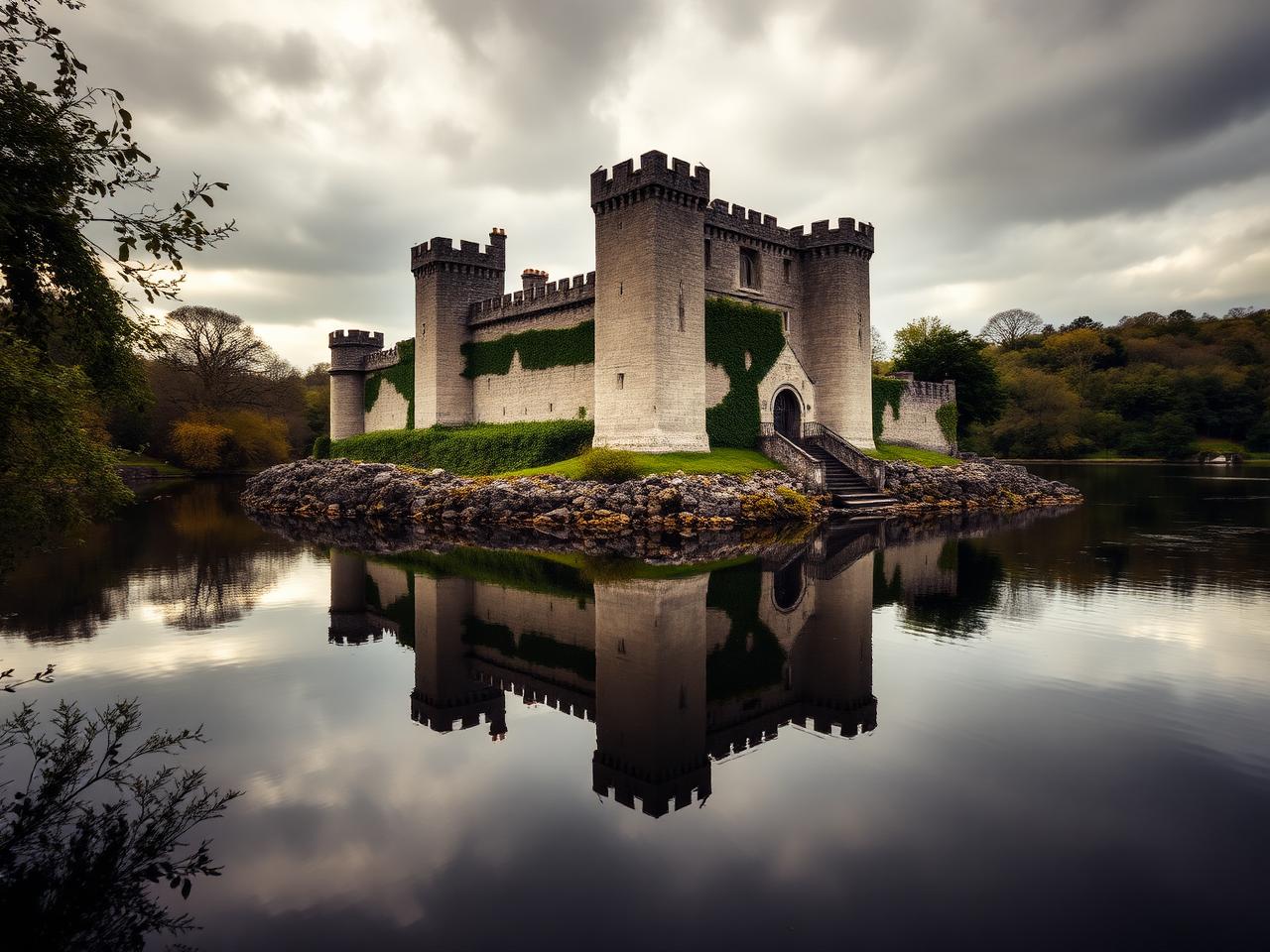
Founded in 1142 by Conor O'Brien on a defensive rock in the River Suir and rebuilt and enlarged by the Butlers from 1375, Cahir is among the largest and best preserved castles in Ireland and retains one of the very few working medieval iron portcullises in the country. In 1599 the Earl of Essex brought siege artillery against it and battered a breach in three days — an event thought remarkable enough to be reported to the English court as the taking of the strongest fortress in Ireland. In 1650 its garrison surrendered to Cromwell's forces without a shot, which is precisely why so much of it survives intact.
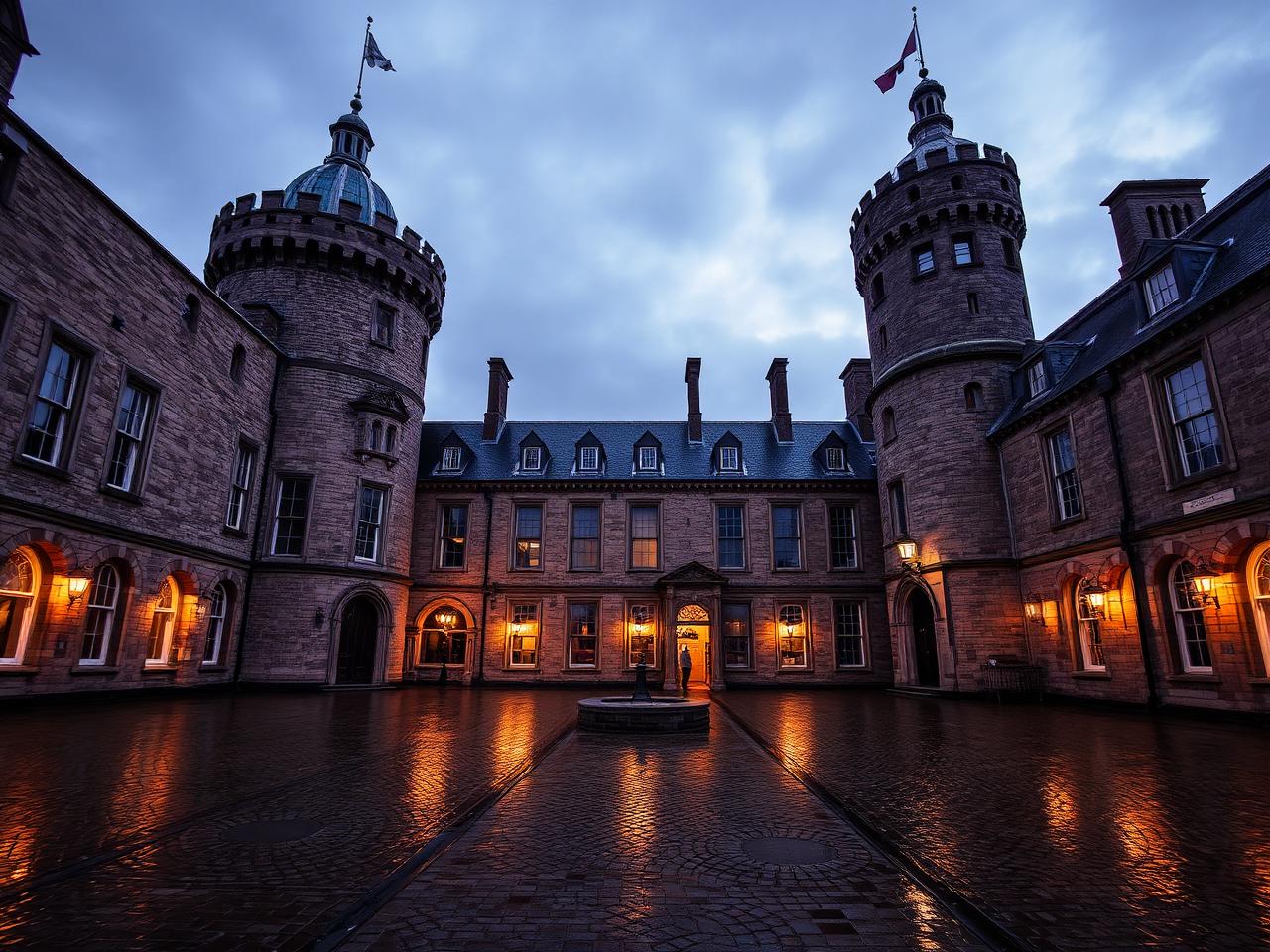
Ordered by King John in 1204 on the site of the earlier Viking fortress at the dark pool — the dubh linn that named the city — Dublin Castle was the seat of English and then British rule for over seven centuries: military fortress, royal treasury, court of law, and residence of the viceroys. Its Record Tower still stands from the thirteenth century. On 16 January 1922, following the War of Independence and the Treaty, it was handed over to Michael Collins and the Provisional Government. The single most potent symbol of foreign authority in Ireland changed hands in a ceremony that lasted minutes.
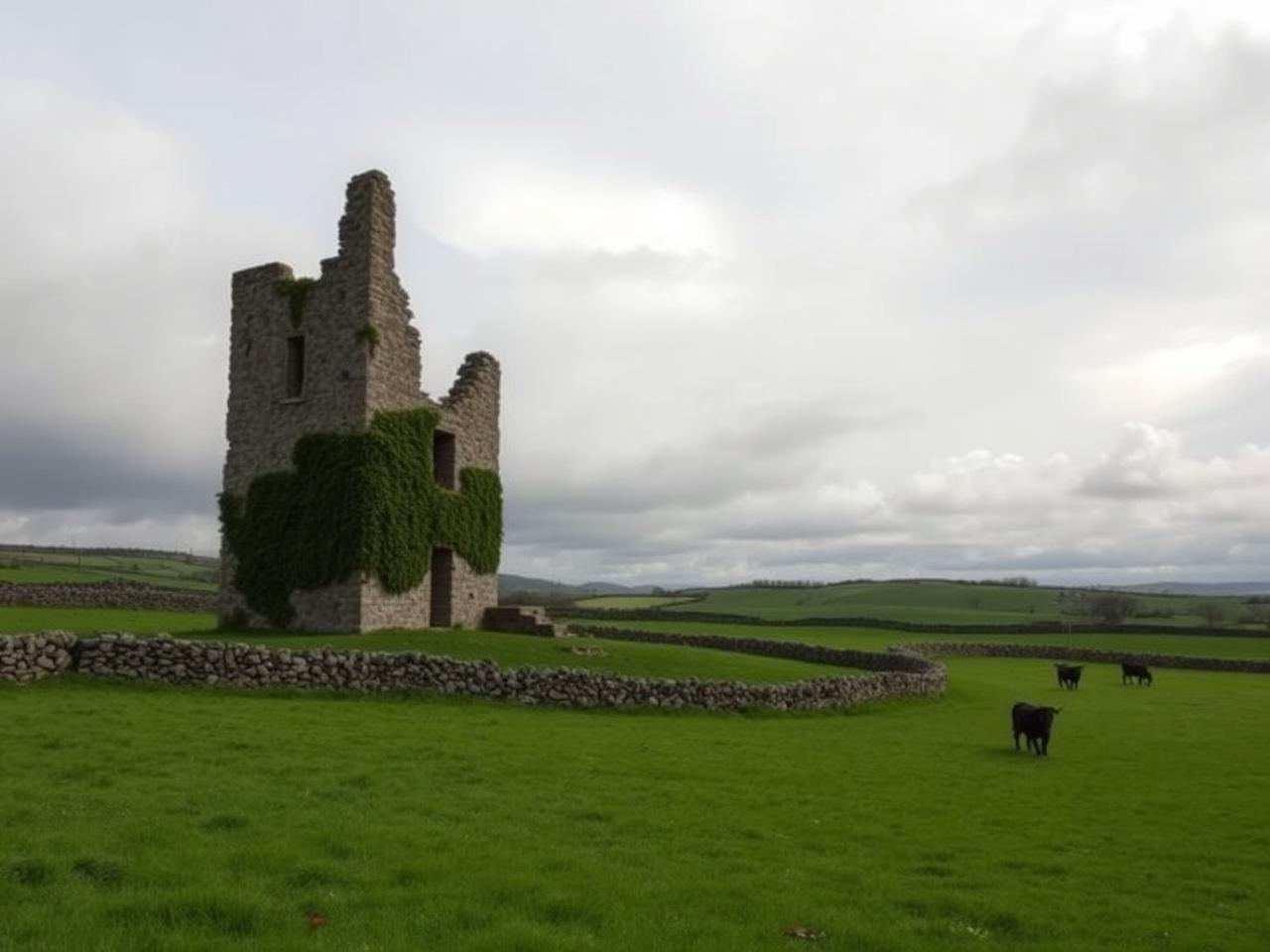
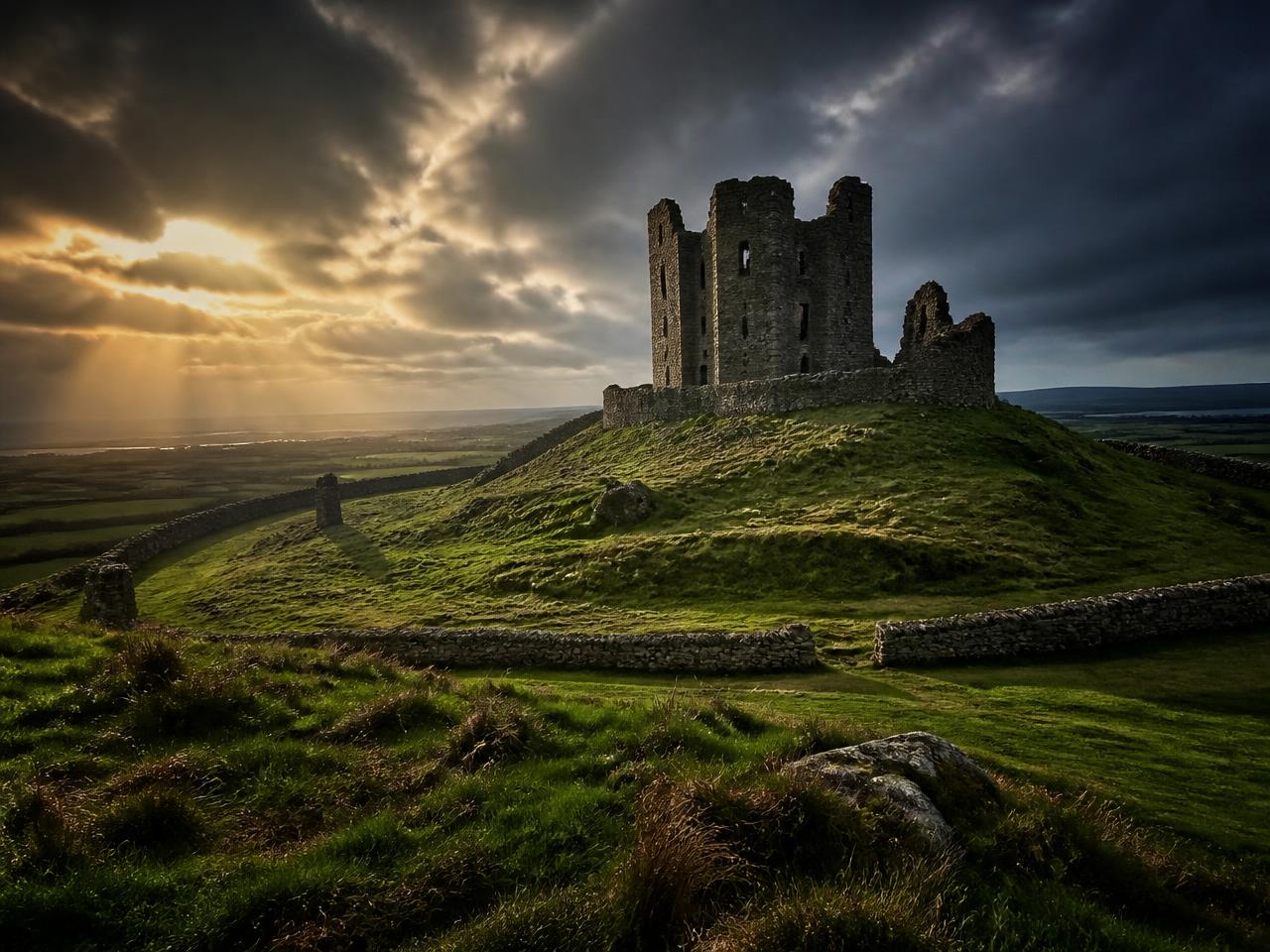
The tower house is Ireland's own contribution to military architecture: a tall, narrow, four- or five-storey stone house with a vaulted ground floor, a spiral stair turning clockwise to favour a right-handed defender, a murder hole above the door and a walled bawn for cattle. Thousands were built between roughly 1400 and 1650 by Gaelic and Old English families alike, some helped by a royal subsidy of ten pounds offered in the Pale in 1429.
They are the reason the Irish countryside is punctuated by grey ruins in the middle of green fields. Each was a household, a court, a granary and a last refuge. Their sheer number is the plainest evidence of what these centuries were like: a country where every substantial family expected, sooner or later, to be attacked.
Chapter Thirty-Three — Four Eras of Invasion
Ireland has faced at least four distinct eras of foreign invasion and imperial conquest. Read separately they look like a run of bad luck. Read together they show a pattern: each began with raiding or opportunism, each hardened into settlement, law and confiscation, and each broke on the same rock — a population that would not stop being itself.
I · 795–1014 · The Norse
Two centuries of raiding that began at Rathlin in 795 turned into longphuirt, then into Dublin, Waterford, Wexford, Cork and Limerick — the first true towns on the island. The Norse were absorbed rather than expelled: Hiberno-Norse families intermarried, took Irish law and left Irish surnames, shipbuilding, coinage and trade routes behind them.
II · 1169–1400 · The Cambro-Normans
Invited into a provincial quarrel and staying for eight centuries, the Normans brought castles, boroughs, shire courts and a claim of lordship blessed by Henry II. Within two hundred years their descendants were speaking Irish, marrying Irish and fostering Irish children — which is exactly what the Statutes of Kilkenny of 1366 were written to stop. By 1400 crown authority had contracted to the Pale.
III · 1534–1691 · Tudor and Stuart conquest
The most destructive era: surrender and regrant, the Munster and Ulster plantations, the Nine Years' War, the Flight of the Earls, the Cromwellian settlement with its transportations and land transfers, the Williamite war, and then the Penal Laws that made Catholic land ownership and public office nearly impossible. Land ownership was transferred on a scale seen almost nowhere else in Europe.
IV · 1801–1922 · The Union and the Empire
The Act of Union abolished the Irish parliament and governed Ireland from Westminster through Dublin Castle. It presided over the Great Hunger, mass emigration, the Land War, the language's decline and the constitutional campaigns that followed. It ended with the Rising, the War of Independence, the Treaty and partition.
Through all four the same instruments of survival recur: the language kept in the kitchen, the Mass said in the open, the poem written in defiance, the emigrant's remittance sent home, the game played on a Sunday field, the memory carried by people who owned nothing else. A country can be occupied. An identity has to be surrendered, and Ireland never surrendered hers.
Chapter Thirty-Four — Leaving, and Still Being Irish
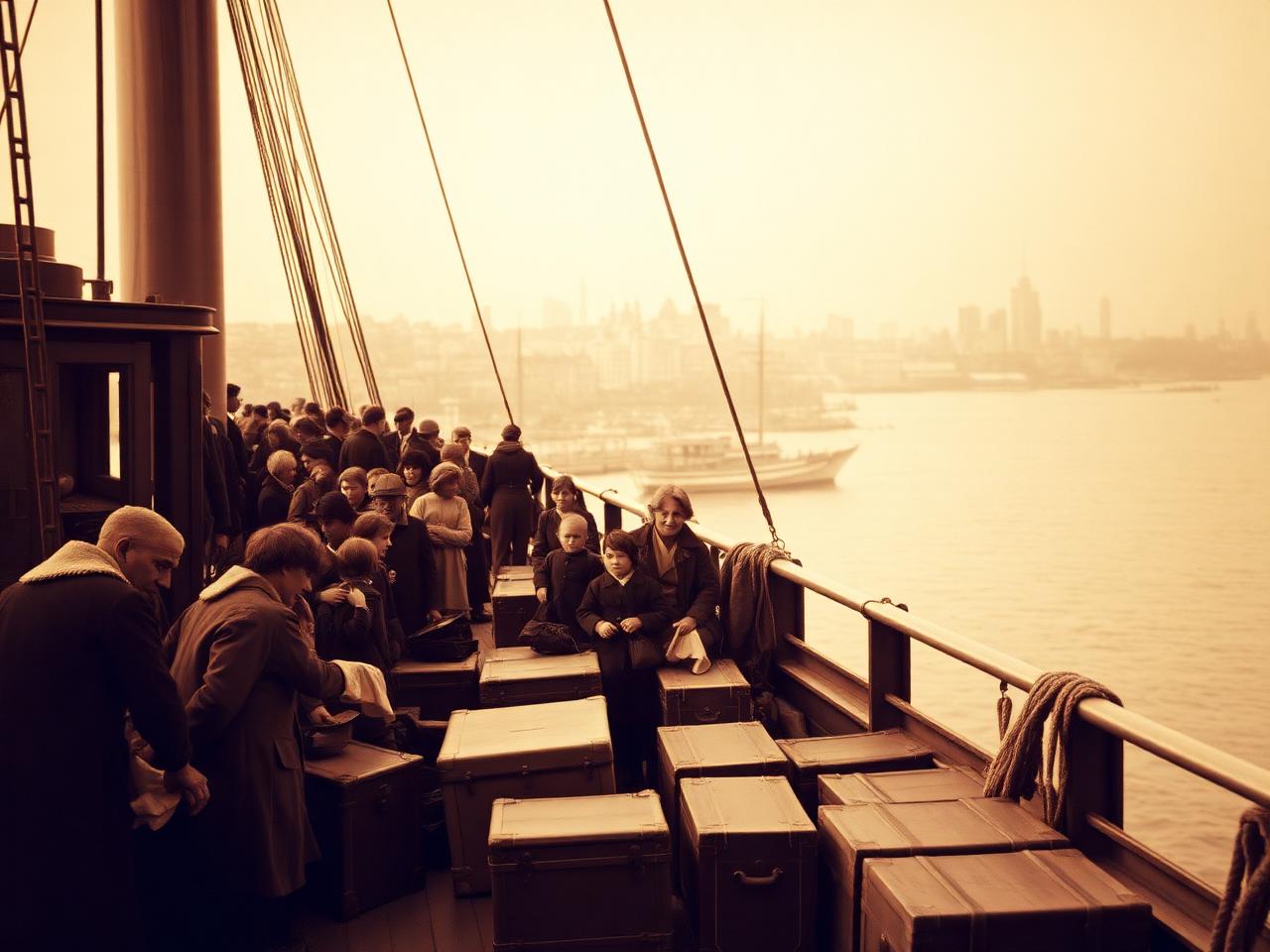
Between 1845 and 1855 roughly a million people died in the Great Hunger and around a million more left. Emigration did not stop when the hunger did: by 1900 more Irish-born people lived outside Ireland than in it, and between 1820 and 1920 some four and a half million Irish people entered the United States alone. Others went to Liverpool and Glasgow, to Boston, New York, Philadelphia and Chicago, to Toronto and Montreal, to Sydney, Melbourne and Buenos Aires.
What it was actually like is easy to sentimentalise and should not be. It meant an American wake the night before — the family mourning a living person they did not expect to see again. It meant weeks in steerage, quarantine at Grosse Île or inspection at Castle Garden and later Ellis Island, and arrival into cities where notices sometimes stated plainly that Irish need not apply. It meant young women travelling alone in numbers unusual for any European migration, into domestic service and later into teaching and nursing.
And it meant remittances. Emigrants sent money home in such quantities that they financed the passage of the next family member, paid rents, and kept whole parishes alive. The diaspora built canals, railroads and cathedrals; it filled police forces and unions; it produced presidents. It also funded Irish politics from abroad, from the Fenian Brotherhood to the fundraising tours of the independence period.
Today somewhere near seventy million people worldwide claim Irish descent, and the state formally recognises them. They still represent Ireland — in the parades of 17 March, in Gaelic football and hurling clubs from Boston to Brisbane, in Comhaltas branches teaching tunes on other continents, and in the simple fact that an Irish passport is one of the most widely welcomed documents on earth. A small island's culture travelled further than its empire-building neighbours ever managed to send theirs, and it travelled in the luggage of the poor.
Chapter Thirty-Five — The Lucky Irishman
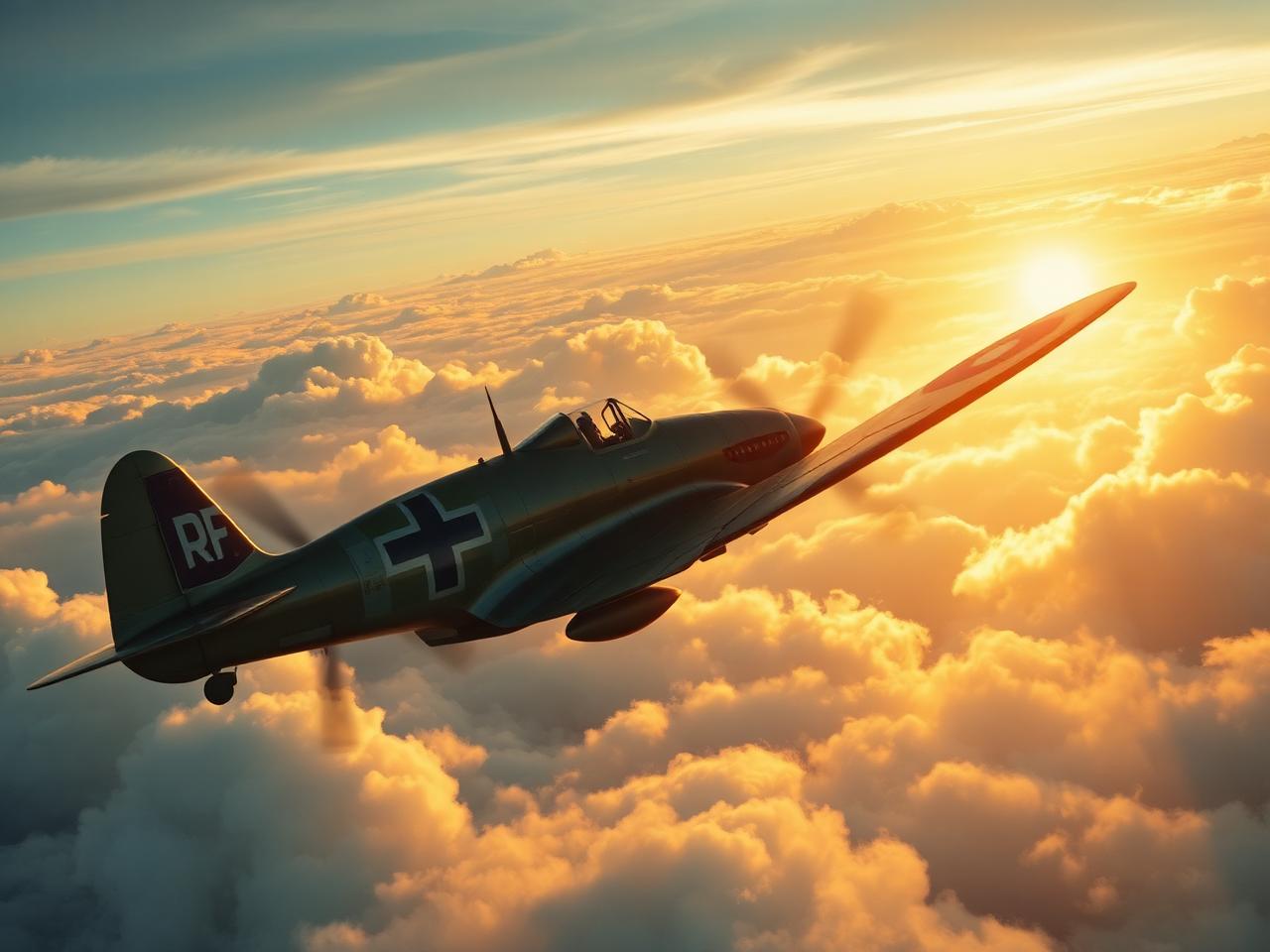
He was born in Dublin on 17 July 1919, in the newly divided Ireland of his childhood, and he joined the Royal Air Force in 1938. Flying Hawker Hurricanes with No. 85 Squadron he fought in the Battle of France in May 1940, where he was shot down twice in two days, and then through the Battle of Britain from Debden and Croydon.
He was shot down four times in all. On 26 August 1940 he baled out into the sea off the Essex coast and was picked up; on 11 July 1941 he took to his parachute again after his aircraft was hit. Later in the war he flew night defence, served in Italy as a squadron commander with Spitfires, survived a crash-landing in enemy-held territory and was helped back to Allied lines by Italian civilians. He was awarded the Distinguished Flying Cross in 1941 and retired as a Group Captain in 1969.
He called himself "the Lucky Irishman", and he meant it as a rebuke to the word hero. He said repeatedly that the men who did not come back were the ones who deserved the attention, and that he had simply been fortunate — four times over. He was the last surviving pilot of The Few, the aircrew Churchill named in 1940, and he died on 17 March 2025 — Saint Patrick's Day — at the age of 105, in Dublin.
Tens of thousands of people from a neutral Ireland volunteered in the Allied forces in that war. Hemingway's badge of honour was a small purple-and-white ribbon and a nickname he chose himself, and his story is the plainest answer to anyone who thinks Irish luck means something got easy.
Chapter Thirty-Six — The Luck of the Irish
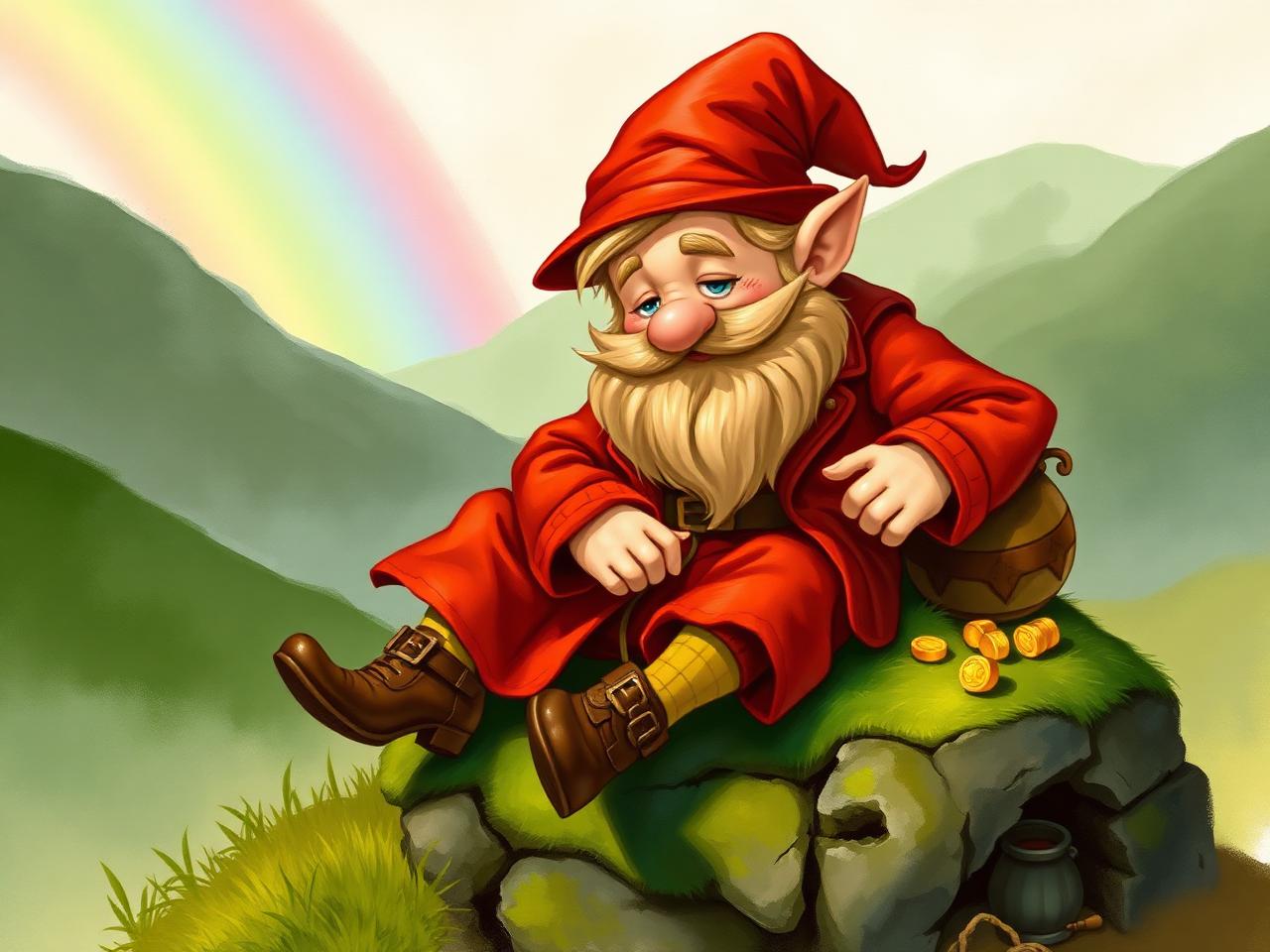
The leipreachán — from the Old Irish luchorpán, "small body" — belongs to the solitary fairies of Irish tradition, and he is not a mascot. He is a craftsman. His trade is shoemaking, and in the old tales you find him by the sound of a single hammer tapping one shoe, never a pair, in a hedge or under a bush.
Appearance. In the earlier written accounts of the eighteenth and nineteenth centuries he wears red, not green — a red coat with seven rows of seven buttons in one Kerry description, a cocked hat, buckled shoes. The green suit is a later fashion, popularised in the twentieth century as Ireland's national colour became fixed in the popular imagination abroad.
The pot of gold. He is said to guard a crock of coin hidden where the rainbow meets the ground — a hiding place chosen with some care, since a rainbow's end can never be reached.
Three wishes. Catch him and he must buy his freedom with treasure or with three wishes. But the tales are unanimous on the catch: you must never take your eyes off him, and he will spend every second trying to make you look away. Every story of a leprechaun's gold ends with a man who glanced aside for an instant and was left holding nothing.
That is the real shape of Irish luck, and it runs through the whole of this site. Not a gift from the sky — a bargain with a trickster, won by refusing to blink.
Chapter Thirty-Seven — Man the Fisher
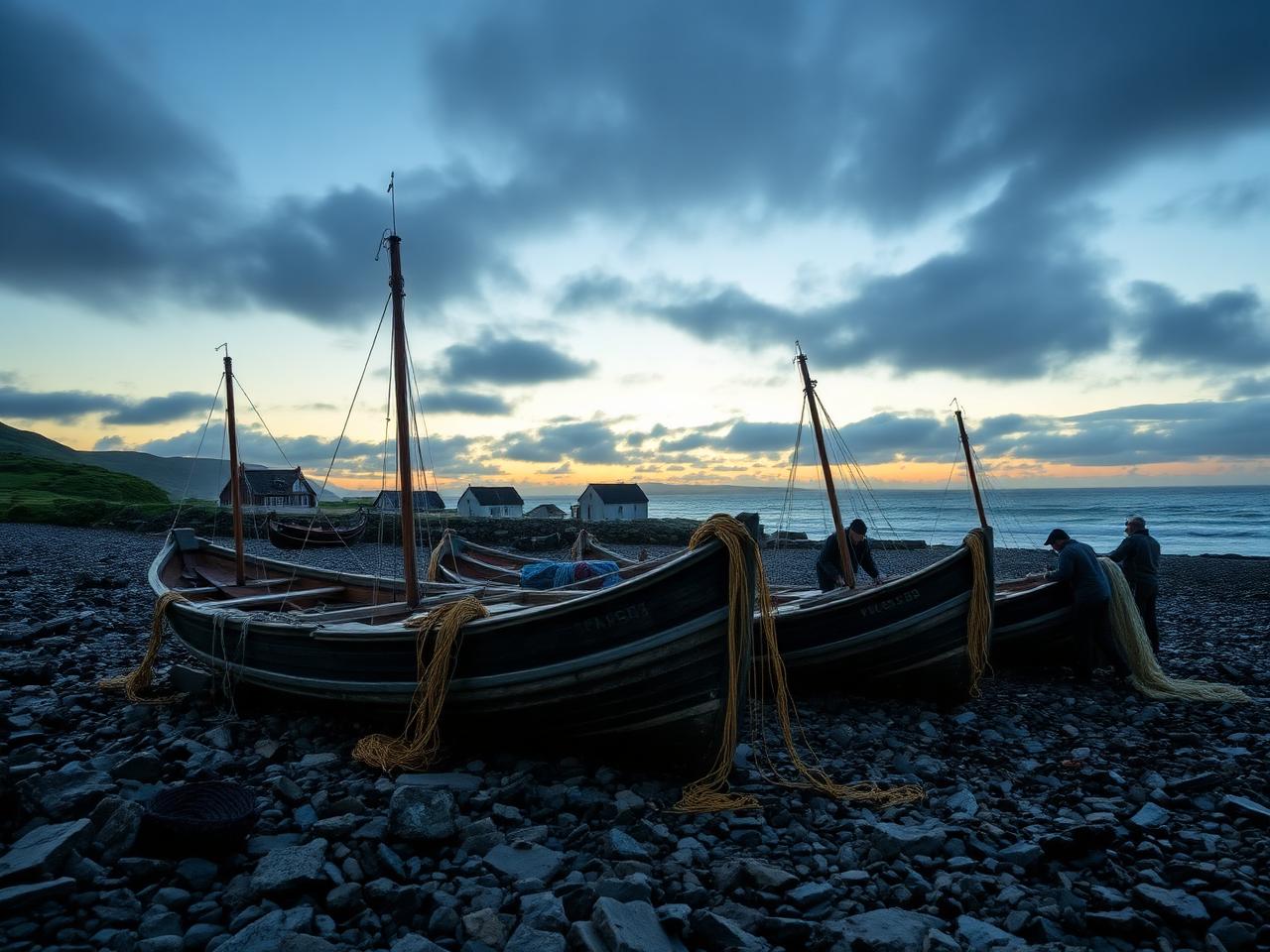
The phrase "Man the Fisher" comes from Lawrence J. Taylor's study of salmon fishing in Teelin, County Donegal, published in 1981, which argued that fishing in the west of Ireland could not be understood as an economic activity alone. Crews, shares, boats and the very right to fish a stretch of water expressed the structure of the community itself — who was kin to whom, who had a claim, who was owed.
It sits within a longer tradition of Irish community study. Conrad Arensberg and Solon Kimball's Family and Community in Ireland (1940), based on fieldwork in County Clare, described the small-farm household as an institution rather than a family: land passing intact to one heir, the others marrying late, entering the Church or emigrating. On the coast, where holdings were tiny and the sea was the other half of the living, the same logic ran through the boats.
The practical shape of it was the currach and the share. A crew of three or four neighbours or cousins put out in a tarred canvas-and-lath boat that two men could carry, worked salmon nets, lobster pots or mackerel lines, and divided the catch by agreed shares — one to each man, one to the boat, one to the gear. Nobody was employed; everybody was owed. Rights to particular pools and strands were inherited and defended, and disputes were settled locally long before any state licence existed.
It was a hard, cold, frequently fatal living, and it produced one of the most cooperative social systems in Europe — the same instinct as the meithealon land. Modern quota systems, aquaculture and safety regulation have changed the work beyond recognition, but the harbours of Donegal, Mayo, Galway, Clare and Kerry still run on the assumption that a boat is a relationship, not a business.
Chapter Thirty-Eight — The Games
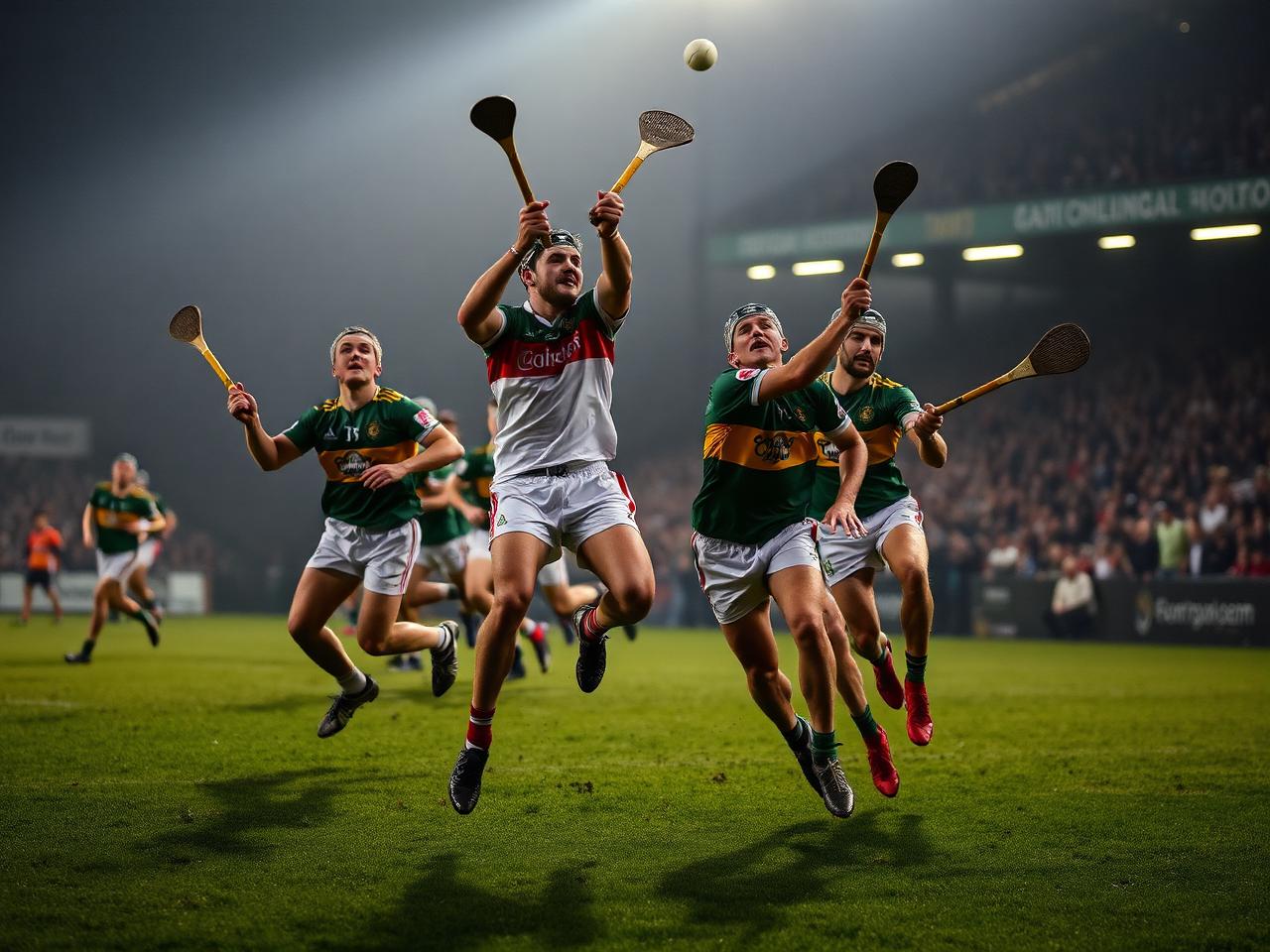
The Gaelic Athletic Association was founded in Hayes' Hotel, Thurles, on 1 November 1884 by Michael Cusack, Maurice Davin and a handful of others, to codify and defend Irish games at a moment when they were being displaced. It became the largest amateur sporting organisation in the world, and it is still organised by parish and county: you play for where you are from, and nobody at any level is paid to play.
Hurling is the oldest field game in Europe, referenced in Irish law tracts and in the Táin Bó Cúailnge, where the boy Cú Chulainn arrives at Emain Macha driving a ball before him with his stick. It is played with a wooden camán of ash and a leather sliotar that travels well over a hundred kilometres an hour, caught in the hand, balanced on the stick at a run and struck from the air. Camogie is the women's game, governed since 1904 by its own independent association.
Fifteen a side with a round ball, combining catching, hand-passing, soloing and kicking — recognisably related to both soccer and rugby and identical to neither. Scoring is shared with hurling: over the crossbar between the posts is one point, into the net beneath it is a goal worth three. Ladies' Gaelic football has been run by its own association since 1974, and its All-Ireland finals now draw crowds larger than most professional leagues in Europe manage.
Gaelic handball is played by striking a small ball against an alley wall with the gloved hand, in courts found behind schools and chapels across the country; rounders, a bat-and-ball game formalised in the nineteenth century, is the fourth code the association governs. All four are amateur, and the proceeds of the great days at Croke Park — a stadium holding over eighty-two thousand — go back into the clubs.
Chapter Thirty-Nine — Fifteen Hundred Years of Laughing Back
Irish comedy did not begin in a club. Under early Irish law the file, the trained poet, held a rank close to that of a lord, and his satire — áer — was a recognised legal weapon. A king who refused hospitality or broke his word could be satirised, and the law tracts treat the damage to his honour-price as real and compensable. The legends go further and claim a satire could raise blisters on a man's face. No other European tradition wrote mockery into its statute books.
That inheritance runs straight through the written centuries: Jonathan Swift's A Modest Proposal in 1729, proposing that the Irish poor sell their children as food, remains the most savage satire in the English language, and it was written by a Dublin dean about a famine policy. Oscar Wilde turned wit into a weapon aimed at the class that had colonised him. Shaw did the same with argument; Flann O'Brien did it with the language itself; Spike Milligan detonated the whole structure of the joke.
The modern form kept the defiance. Dave Allen sat on a stool with a whiskey and a cigarette and dismantled the Church on British television in the 1970s. Since then Ireland has exported comic talent out of all proportion to its size — Tommy Tiernan, Dylan Moran, Ardal O'Hanlon, Sharon Horgan, Aisling Bea, Dara Ó Briain, Deirdre O'Kane and many more — and produced in Father Ted one of the most quoted comedies ever made anywhere.
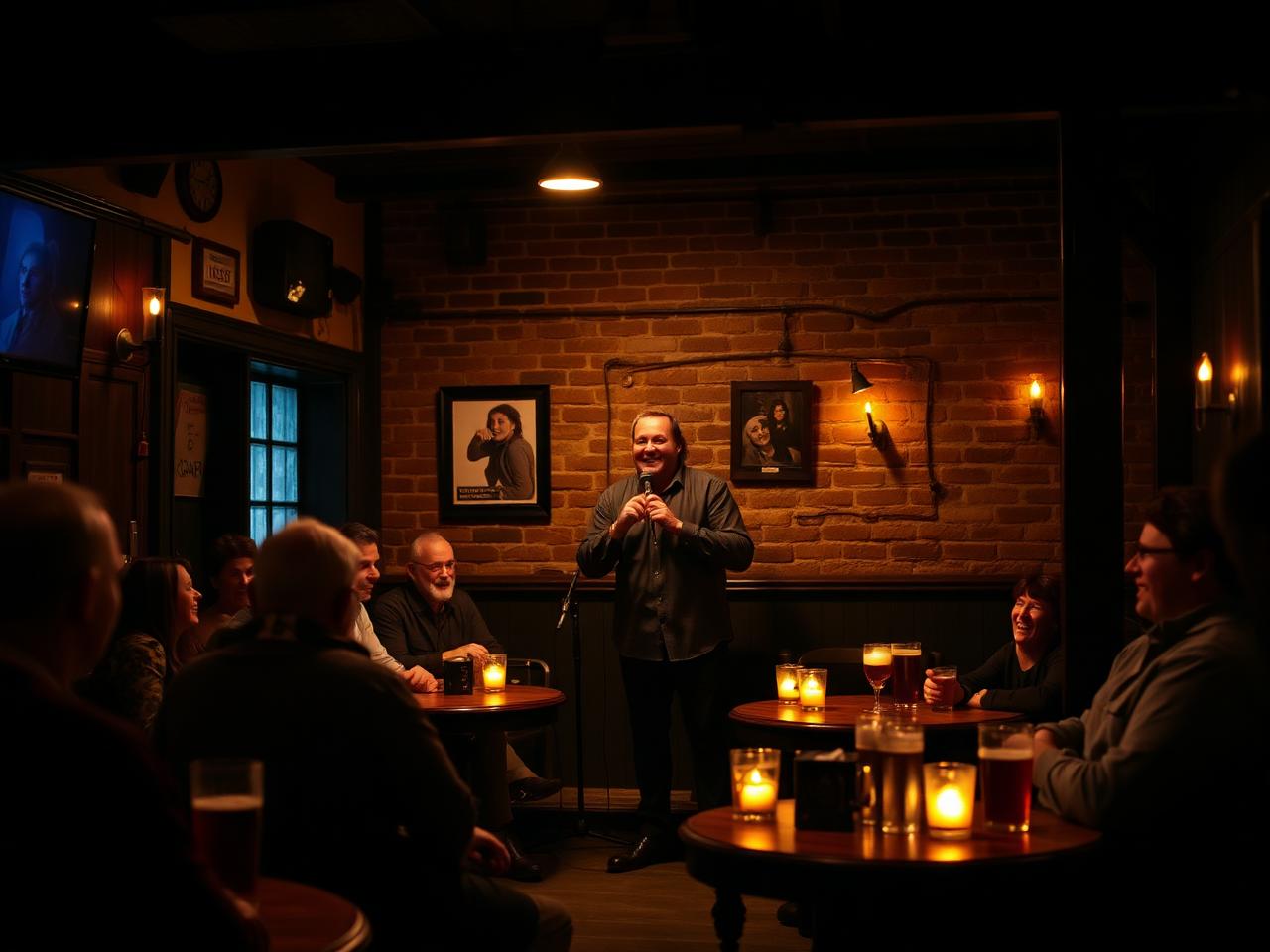
The engine of it is the pub back room and the storytelling culture around it: the seanchaí's timing applied to a microphone, the slagging that is a form of affection, and the dark wit that comes from centuries in which laughing at power was often the only available act of resistance. The Cat Laughs festival in Kilkenny, running since 1995, is where much of it is still tested in front of audiences small enough to see your face.
Chapter Forty — The Troubles: Causes, Course and the Peace
The Government of Ireland Act 1920 partitioned the island. Northern Ireland was drawn as six of Ulster's nine counties — the largest area in which a unionist majority could be guaranteed — leaving a large nationalist minority inside a state built to be permanently unionist. Its parliament at Stormont governed for fifty years without a change of party.
The grievances that produced 1968 were concrete and documented: local government boundaries gerrymandered so that nationalist majorities returned unionist councils, most notoriously in Derry; a local franchise tied to property that disenfranchised many; public housing allocated by those same councils; discrimination in employment; and policing by a force, the Royal Ulster Constabulary, backed by the almost entirely Protestant B-Specials and the Special Powers Act.
The Northern Ireland Civil Rights Association marched in 1968 for one man one vote and fair housing, and was batoned off the streets. The Battle of the Bogside in August 1969 brought British troops onto the streets; internment without trial in August 1971 swept up hundreds, overwhelmingly nationalist, and radicalised a generation; on Bloody Sunday, 30 January 1972, soldiers shot dead thirteen unarmed civil rights marchers in Derry, with a fourteenth dying later. Stormont was suspended in March 1972. Paramilitary campaigns on both sides followed — the Provisional IRA, the UVF and UDA — and by the end some 3,500 people were dead, roughly half of them civilians, in a population of one and a half million.
It took thirty years and every failed attempt along the way: Sunningdale in 1973, brought down by the loyalist workers' strike of 1974; the hunger strikes of 1981 and the ten deaths that turned republicanism towards elections; the Anglo-Irish Agreement of 1985, which gave Dublin a consultative voice for the first time; the Hume–Adams talks; the Downing Street Declaration of 1993 under John Major and Albert Reynolds; and the ceasefires of 1994.
Blair took office in May 1997 with a large majority and made Northern Ireland an immediate priority — which, with the Irish government of Bertie Ahern, the chairmanship of the American senator George Mitchell, and the unorthodox and often fearless work of his Secretary of State Mo Mowlam, changed what was possible. Within weeks he had signalled that Sinn Féin could enter talks on a restored ceasefire; in June 1997 he issued a formal statement of regret for Britain's role in the Great Famine; Mowlam went into the Maze prison in January 1998 to talk directly to loyalist prisoners and hold the ceasefires together.
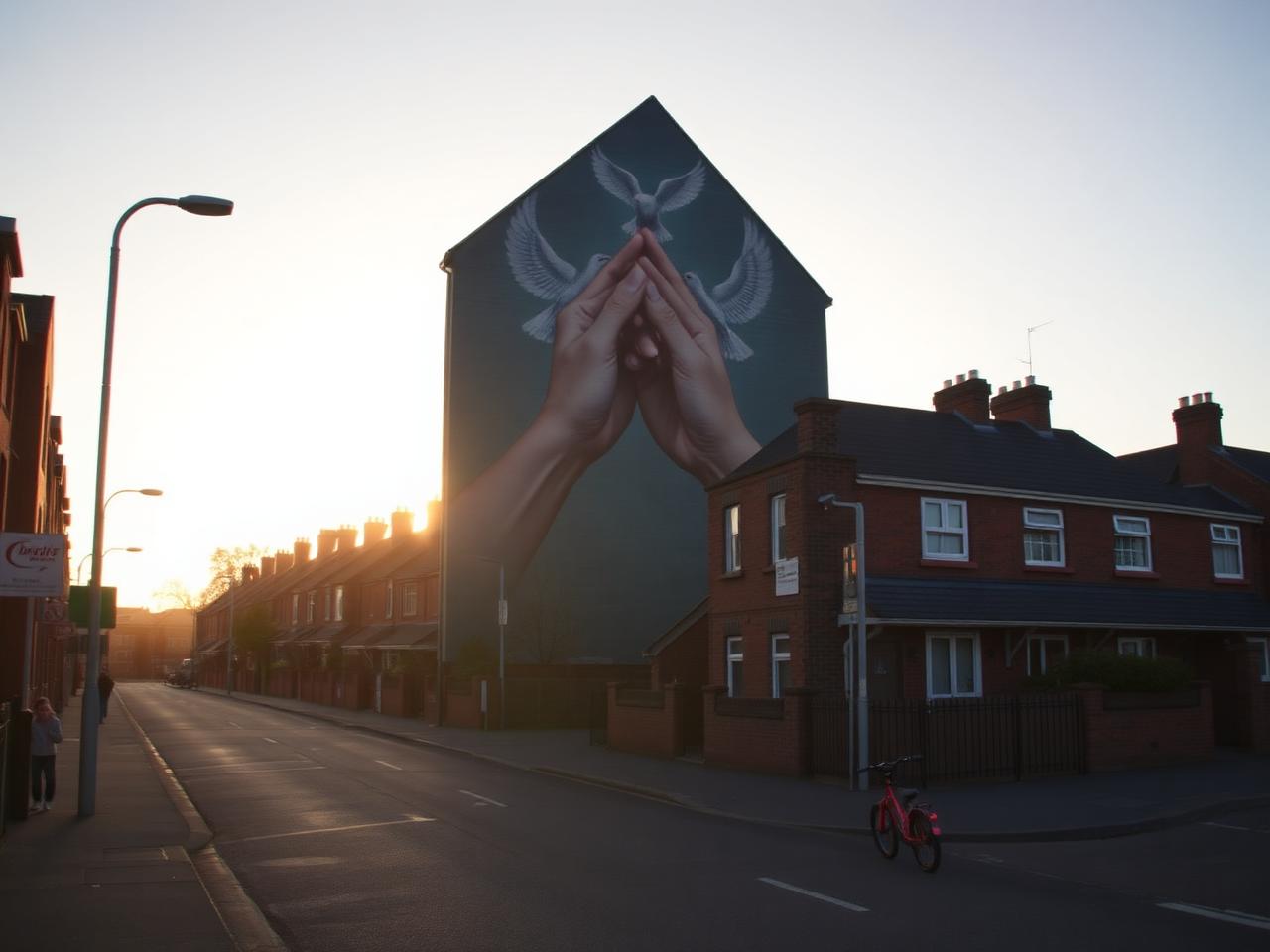
The Belfast or Good Friday Agreement was concluded on 10 April 1998 after a sleepless final week and Blair's personal presence at Stormont. Its architecture: power-sharing devolution with a First and deputy First Minister elected together; cross-community voting rules; a North–South Ministerial Council; a British–Irish Council; the principle of consent, under which the constitutional status of Northern Ireland can change only by a majority there; and, in return, Ireland's amendment of Articles 2 and 3 of its Constitution. It was endorsed on 22 May 1998 by 71 per cent in the North and 94 per cent in the South, voting on the same day for the first time since 1918.
It was not the end of pain — the Omagh bombing in August 1998 killed twenty-nine people and two unborn children, the worst single atrocity of the conflict, and Blair's government responded with emergency legislation on both sides of the border. Implementation took another decade: the Patten reforms replaced the RUC with the Police Service of Northern Ireland in 2001 with recruitment balanced across communities; IRA decommissioning was verified in 2005; the St Andrews Agreement of 2006 brought the DUP and Sinn Féin into government together in 2007. In 2010 the Saville Inquiry, established under Blair in 1998, found the Bloody Sunday killings unjustified and unjustifiable, and the British prime minister apologised in the Commons.
The island came out of it with stronger institutions than it went in with. In the South: a professional, unarmed police service and a Defence Forces contribution to UN peacekeeping that has been continuous since 1958; a modern intelligence and border-security relationship with London and Belfast; the Independent Commission for the Location of Victims' Remains; and an economy that stopped exporting its young people. In the North: shared policing accountable to a cross-community board, human-rights and equality commissions written into law, and an Ombudsman with real powers. Between them: a Common Travel Area kept open, and the memory of what closing it costs. Legacy issues remain genuinely unresolved, and the site does not pretend otherwise. But a war that most people believed insoluble was ended by negotiation, and that is Ireland's largest single contribution to the world's politics.
Key dates
Chapter Forty-One — The Irish Free State Government, 1922–1923
The Anglo-Irish Treaty of 6 December 1921 was ratified by Dáil Éireann on 7 January 1922 by sixty-four votes to fifty-seven. It offered dominion status within the British Empire rather than the thirty-two-county Republic declared in 1919, and it required an oath of fidelity to the Crown. Éamon de Valera and the minority walked out. Two authorities now existed side by side: the Provisional Government of the Irish Free State, chaired by Michael Collins, and the Dáil government under Arthur Griffith.
Anti-Treaty forces occupied the Four Courts in April 1922. After the June election returned a pro-Treaty majority and under sustained British pressure, the Provisional Government opened fire on the building on 28 June with borrowed eighteen-pounder field guns. The Civil War had begun. Within eleven weeks both of the state's founders were dead: Griffith of a cerebral haemorrhage on 12 August 1922, and Collins shot in an ambush at Béal na mBláth in his own county of Cork on 22 August, aged thirty-one.
W. T. Cosgrave took over as chairman and, from 6 December 1922, as President of the Executive Council of the newly constituted Irish Free State. The government he led prosecuted the war with a severity it never afterwards disowned: the Public Safety legislation of September 1922 established military courts, and between November 1922 and May 1923 the state executed seventy-seven republican prisoners — more than the British had executed in the entire War of Independence. Among them was Erskine Childers, shot for possession of a small pistol Collins had given him. Reprisal killings by both sides, and the deaths of ministers' colleagues such as Seán Hales, hardened everything further.
Frank Aiken ordered the anti-Treaty forces to dump arms on 24 May 1923. There was no surrender and no treaty; the war simply stopped, leaving perhaps fifteen hundred dead, the country's infrastructure wrecked, and a bitterness that shaped Irish party politics for eighty years — Fine Gael and Fianna Fáil are the direct descendants of the two sides.
What that government did next is the part too often left out. In the middle of a civil war it created an unarmed police force, An Garda Síochána, and kept it unarmed. It subordinated the army to civilian control and survived the crisis of 1924 that tested it. It built a professional civil service, ran honest elections, and in 1932 handed power peacefully to the men it had recently been shooting at — one of the very few new states of that decade anywhere in Europe to manage a democratic transfer of power at all. The Republic that followed in 1949 stands on that refusal to abandon democracy in its worst year.
Chapter Forty-Two — The Land Itself
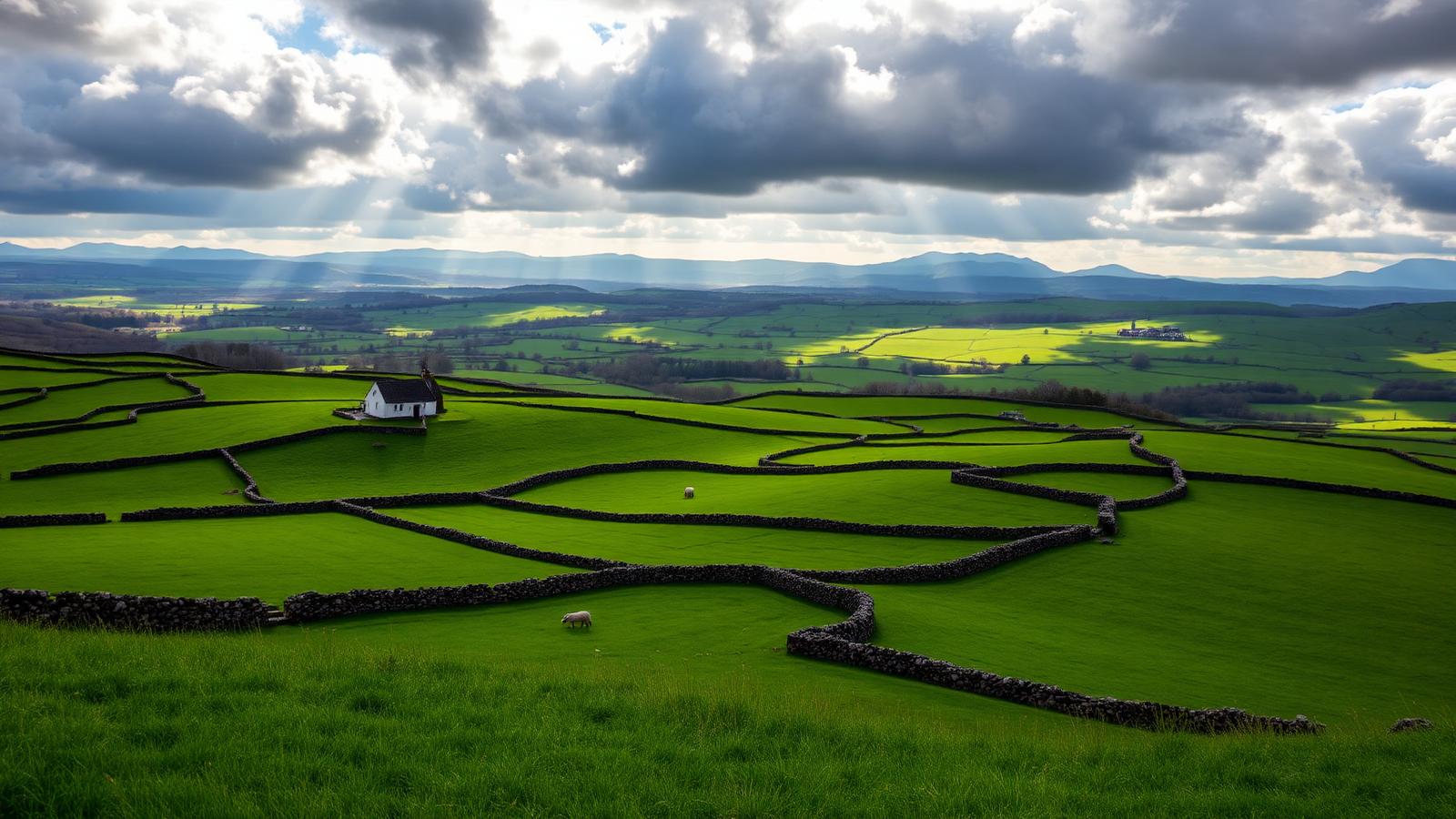
Stand anywhere on high ground in Ireland and you see the same thing: a green patchwork stitched with stone, running to a blue rim of mountain, with weather crossing it in visible columns of light and rain. Those walls were not built for beauty. They were built because the fields had to be cleared of stone before anything would grow, and because a family with almost nothing still had to mark what was theirs. There are enough of them in Connacht alone to reach around the planet several times over.
That is the honest meaning of the phrase this site is named for. Ireland was not handed anything. Every acre of the countryside that now looks so peaceful was cleared, walled, lost, fought over, rented back, tilled through hunger, and finally bought out under the Land Acts by the descendants of the people who had cleared it in the first place. Freedom here was assembled the same way — stone by stone, one law, one election, one generation at a time.
Ireland is for the Irish in the sense the ancestors meant it: a country that belongs to the people who live in it and answer for it, governed from within, in its own name. It is the reason a nation of five million on the western edge of Europe keeps its own language on its road signs, its own games in its stadiums, its own emblem on its passports, and its own seat at the tables where the larger powers sit.
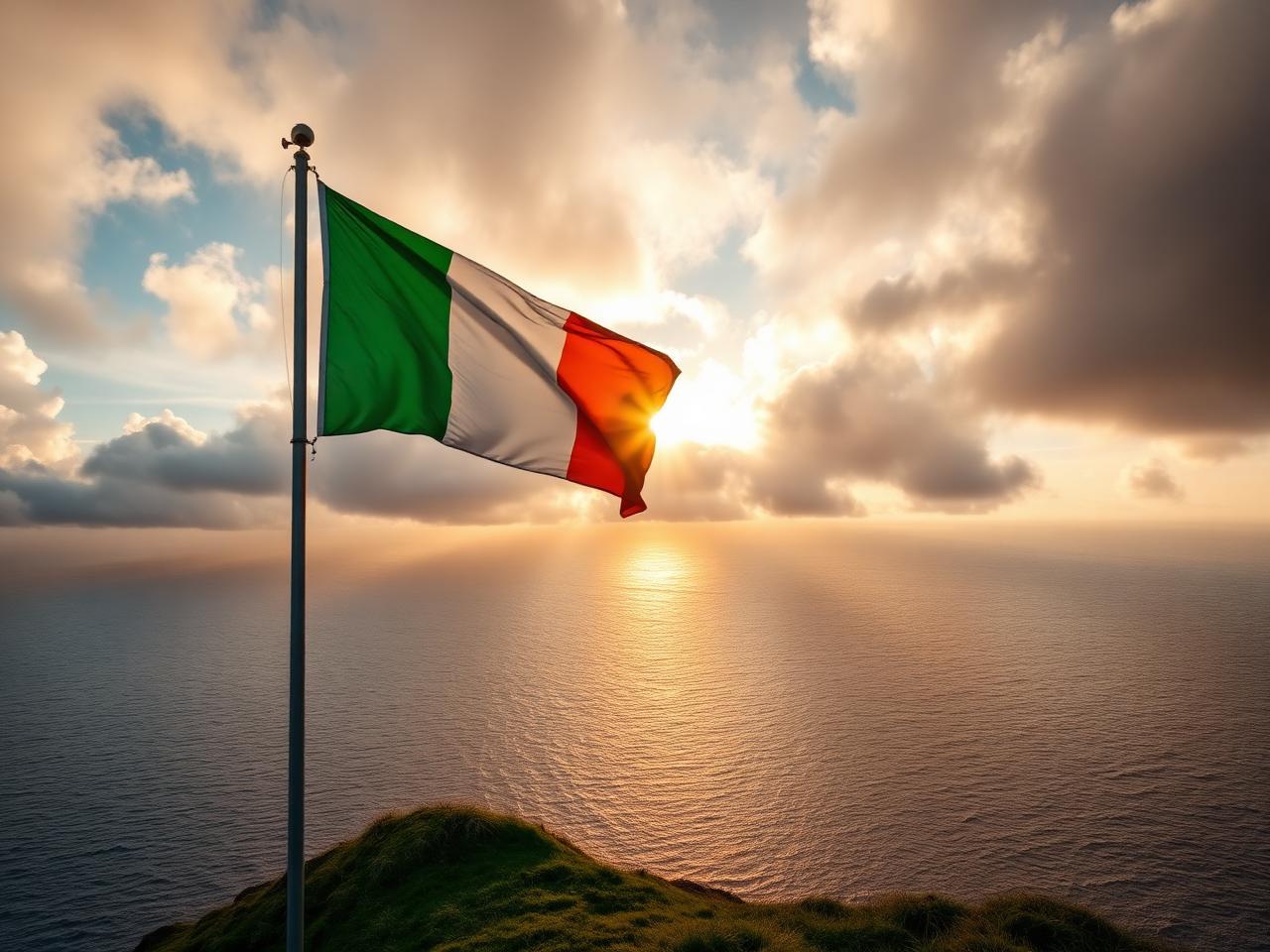
They kept the towns, the townlands and the cities; they kept the faith they were punished for and the tongue they were fined for speaking; and they conquered a freedom most colonised nations never reached. Not by luck. By not blinking.
A Living Tribute to Ireland
This chess table belongs to Stone by Stone, an independent history of Ireland built with respect, appreciation, and honour. Every visitor is invited to sit at the board, choose a standard of play, and move through the royal game as Ireland moved through centuries of struggle, patience, and pride. Finish your game and receive a Certificate of Respect — a personal keepsake from this website, sealed in recognition of your time, your spirit, and your regard for the Irish story.
Taken
Certificate of Respect
Stone by Stone was created to preserve and share Ireland's long journey with dignity and truth. This certificate is awarded to every guest who plays the Cláirseach Chess Table with care and courage. It is not merely a souvenir — it is a mark of respect between this website and you, recognising your patience, your fighting spirit, and your appreciation of Irish history, culture, and identity. Add your name, choose your hand, and receive your sealed Certificate of Respect.
Stone by Stone · An Independent History of Ireland
Certificate of Respect
Awarded for Honour, Appreciation & Regard
This certificate is presented by Stone by Stone in recognition of the bearer named below, who visited this independent history of Ireland with respect, sat at the Cláirseach Chess Table with courage, and played the royal game in the spirit of a people who stood their ground for culture, freedom, and identity. May this award remind you that honour is earned move by move, and that respect given is respect remembered.
Presented with honour and respect to
Your name
Average standard
Standard of play
The Grand Flourish
Chosen hand
Sealed by Stone by Stone with appreciation
Download saves a high-resolution PNG to any device — phone, tablet, or desktop. Share opens your device's native share sheet (WhatsApp, Facebook, X, Instagram, email, and more) with the certificate attached. Sharing travels only through your device's own secure, encrypted connections — nothing is stored or sent anywhere else.
It is a privilege to share this story with you. Every stone, every battle, every song and every quiet act of endurance you have encountered here belongs to the remarkable people who built, defended and renewed Ireland across the centuries.
This website was created with deep respect, appreciation and kindness — a small tribute to a nation that never forgot who it was, even when the world tried to make it forget. If you have read this far, you have already honoured that legacy.
With gratitude, from Stone by Stone